
What's Happening?
The Wabash Cannonball Trail in Northwest Ohio has seen significant improvements over the past five years, making it more accessible and enjoyable for cyclists and hikers. Originally, many of its 66 miles
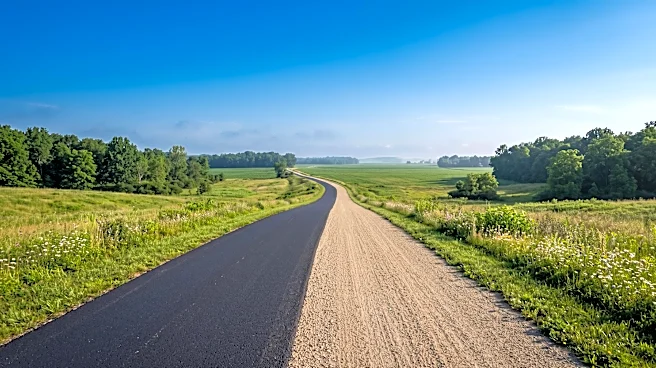
of unpaved sections were rough and required mountain bikes. However, these sections have naturally 'mellowed' into grass-covered, hard-packed, and level surfaces due to continuous use by bikers, foot traffic, and horses, making them suitable for gravel bikes. Additionally, Metroparks Toledo and the Northwestern Ohio Rails-to-Trails Association (NORTA) completed a $2.2 million project, paving another 6-mile stretch of the North Fork. Lucas County and Metroparks Toledo also collaborated on a project that paved, repaired, and resurfaced nearly 9.5 miles of the trail, resulting in over 20 miles of paved asphalt for riders. The trail also offers tranquil hiking opportunities through Northwest Ohio's farmlands, fields, and woods, connecting to the Oak Openings Preserve Metropark, a 5,000-acre area with diverse habitats and over 50 miles of various trails.
Why It's Important?
The enhancements to the Wabash Cannonball Trail are important for several reasons. They significantly boost recreational opportunities for residents and visitors in Northwest Ohio, promoting outdoor activity and healthier lifestyles. The improved accessibility, particularly the new paved sections, caters to a wider range of users, from casual cyclists to serious hikers, thereby increasing public engagement with natural spaces. Economically, well-maintained recreational trails can attract tourism, benefiting local businesses and communities. Furthermore, the preservation and development of such green infrastructure contribute to environmental conservation, protecting diverse habitats like oak savannas and wetland prairies. The collaboration between Metroparks Toledo and NORTA exemplifies successful public-private partnerships in developing community assets, setting a precedent for similar projects across the U.S.
What's Next?
The continued success and popularity of the improved Wabash Cannonball Trail could inspire further investment in rail-to-trail conversions and green infrastructure projects across Ohio and other U.S. states. Local communities and recreational organizations may look to this model for developing their own outdoor spaces, potentially leading to an expansion of interconnected trail systems. Ongoing maintenance and potential future upgrades will be crucial to sustain the quality and accessibility of the trail. Additionally, the increased usage might prompt local businesses to cater more to outdoor enthusiasts, fostering economic growth in the surrounding areas. The connection to Oak Openings Preserve Metropark also highlights the potential for integrating diverse natural areas into larger recreational networks.
Beyond the Headlines
The transformation of the Wabash Cannonball Trail from disused railway lines into a vibrant recreational asset reflects a broader societal shift towards valuing green spaces and active transportation. This development is not just about physical activity; it's about reclaiming historical infrastructure for modern community benefit, fostering a sense of place, and connecting people with nature. The 'mellowing' of unpaved sections through natural processes also subtly underscores the resilience of natural environments and the impact of sustained, gentle human interaction. Ethically, it represents a commitment to public health and environmental stewardship, providing accessible outdoor experiences for all. Culturally, these trails become venues for community gathering, personal reflection, and a deeper appreciation for regional landscapes, contributing to the overall quality of life in the region.