





What's Happening?
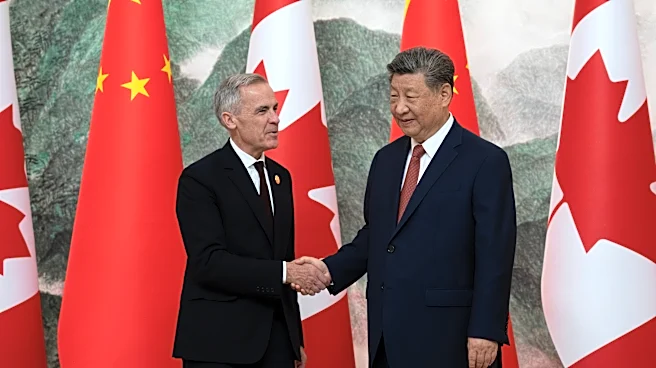
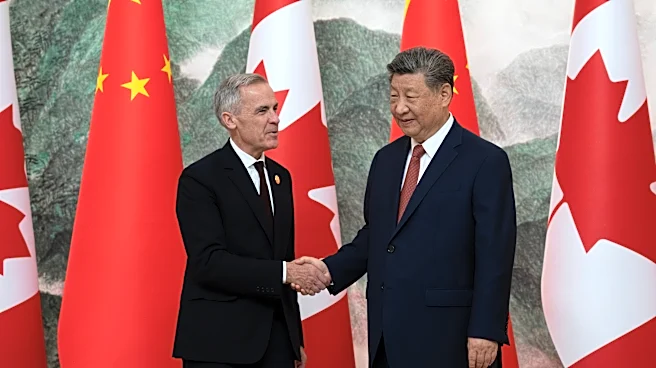
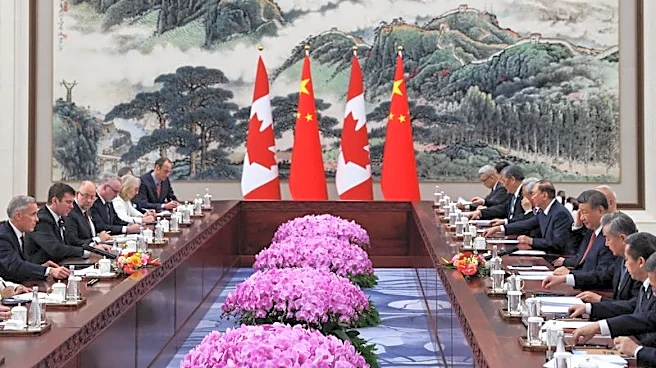
Canada and China have agreed to further tariff cuts on various products, including seafood and steel, following a meeting between Prime Minister Mark Carney and Chinese President Xi Jinping at the Asia-Pacific Economic Co-operation (APEC) summit. This
agreement builds upon a January deal aimed at lowering trade barriers and improving diplomatic relations, which had soured significantly since 2018. The new measures will provide additional tariff relief for approximately $400 million in Canadian exports, including frozen pork cuts and fish and seafood. In return, Canada has extended existing remission measures for certain Chinese steel and aluminum products for two years. Prime Minister Carney stated that Canada is ahead of schedule in its goal to increase exports to China by 50 percent by the end of the decade.
Why It's Important?
This agreement signifies a continued effort by both Canada and China to de-escalate trade tensions and foster economic cooperation. For Canada, reducing reliance on the United States for trade is a strategic objective, and strengthening ties with China is a key component of this strategy. The tariff cuts are expected to benefit Canadian exporters, particularly in the agricultural and fishing sectors, by making their products more competitive in the Chinese market. For China, the agreement helps stabilize trade relations with a significant G7 economy. The broader context of repairing relations, which were strained by tit-for-tat arrests and tariff disputes, is crucial for regional stability and global trade dynamics. The agreement also highlights a shift in Canada's trade policy to diversify its international partnerships.
What's Next?
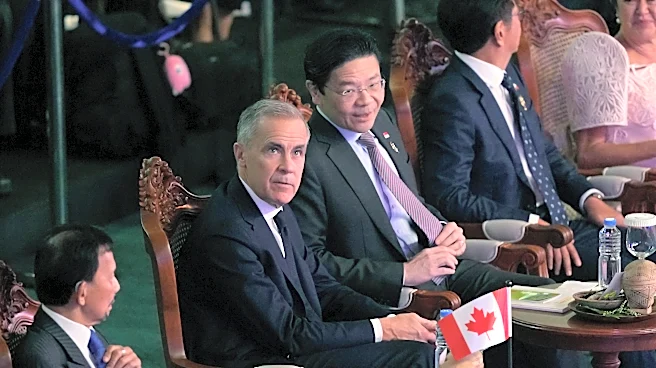
The implementation of these new tariff cuts will likely lead to increased trade volumes between Canada and China in the specified sectors. Prime Minister Carney's ongoing strategy involves developing a network of reliable partners to reduce Canada's relative reliance on the United States, with recent free-trade agreements with the Philippines and ongoing discussions with ASEAN members. The continued diplomatic engagement between Canada and China, as evidenced by this agreement, suggests a sustained effort to maintain positive relations. Future discussions may focus on further expanding trade agreements and addressing any remaining points of contention to ensure long-term stability in their economic partnership.
Beyond the Headlines
The renewed trade cooperation between Canada and China reflects a broader geopolitical trend where nations seek to diversify their economic partnerships amidst global uncertainties. The previous period of strained relations, marked by the arrest of Huawei executive Meng Wanzhou and subsequent retaliatory detentions, underscored the fragility of international diplomatic and trade ties. This agreement signals a pragmatic approach from both sides to prioritize economic benefits over past disputes. It also highlights the complex interplay between trade policy and foreign policy, where economic incentives can drive diplomatic rapprochement. The long-term implications could include a more diversified global supply chain and potentially influence other nations to re-evaluate their trade strategies.