





What's Happening?
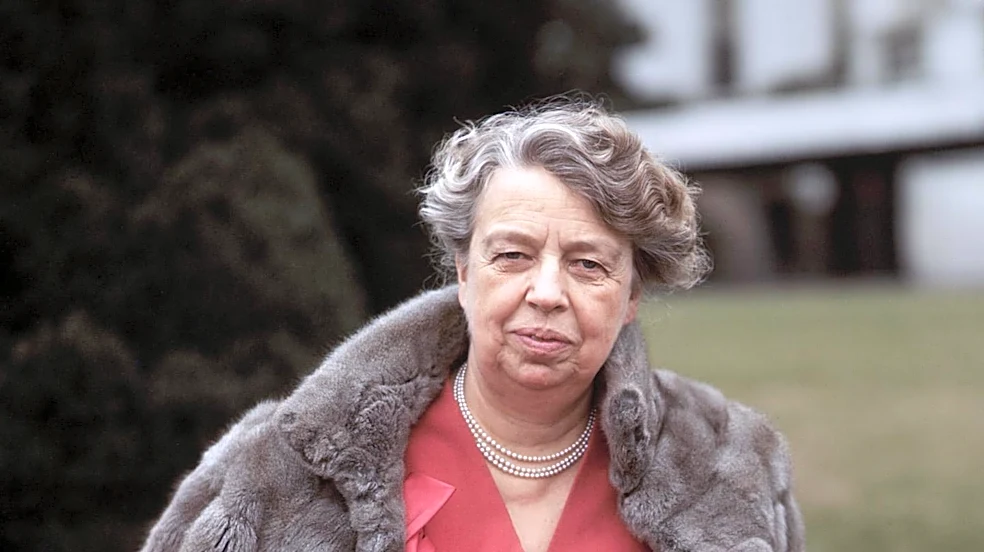
A recent analysis delves into the multifaceted life of Anna Eleanor Roosevelt, challenging the conventional portrayal of her as a mere saint. The article highlights her strategic use of personal suffering and political acumen to become a significant force
in American and international politics, despite never holding elected office. Born Anna Eleanor Roosevelt, she navigated a challenging childhood marked by the early deaths of her parents, Elliott Roosevelt and Anna Hall, and a difficult upbringing with her grandmother. Her marriage to Franklin D. Roosevelt was fraught with betrayal, notably his long-term affair with Lucy Mercer. However, Eleanor Roosevelt leveraged these personal trials to forge an independent political identity. She held 348 press conferences during her husband's presidency, banning male reporters to encourage the hiring of women, and maintained a syndicated newspaper column, 'My Day,' for decades. Her advocacy for civil rights and labor unions often put her at odds with powerful figures like J. Edgar Hoover, who maintained a 3,000-page FBI file on her. Despite private opposition to policies like Japanese internment, her public silence during the war is noted as a significant compromise. Her most celebrated achievement remains chairing the UN Commission on Human Rights, leading to the Universal Declaration of Human Rights in 1948.
Why It's Important?
Eleanor Roosevelt's story is important for understanding the evolution of the First Lady's role from a ceremonial figure to a political actor. Her actions set a precedent for future First Ladies to engage in policy and public advocacy, demonstrating that the position could be a platform for significant influence beyond traditional social duties. Her strategic navigation of a challenging personal life and political landscape illustrates how individuals can convert adversity into leverage, impacting public policy and societal norms. Her work on the Universal Declaration of Human Rights laid the groundwork for modern international human rights law, influencing constitutions and legal frameworks globally. This legacy underscores the enduring impact of her diplomatic efforts and her commitment to human dignity. Furthermore, her experiences with government surveillance highlight historical tensions between civil liberties and national security, a theme that continues to resonate in contemporary U.S. politics. Her life also offers insights into the complexities of gender roles and expectations in leadership during the 20th century, as she consistently pushed boundaries despite societal and political pressures.
What's Next?
The ongoing re-evaluation of historical figures like Eleanor Roosevelt suggests a continued public and academic interest in understanding the full scope of their contributions and complexities. Future discussions may further explore the nuances of her political compromises, such as her public silence on Japanese internment during World War II, and how these decisions shaped her broader legacy. The examination of her personal relationships, including her close bond with Lorena Hickok, will likely continue to inform discussions about LGBTQ+ history and the private lives of public figures. As new historical documents and interpretations emerge, the understanding of Eleanor Roosevelt's impact on U.S. and international policy, particularly in human rights and women's roles in leadership, will continue to evolve. This ongoing discourse will contribute to a more comprehensive and nuanced historical narrative, influencing how future generations perceive leadership, advocacy, and the intersection of personal and political lives.
Beyond the Headlines
Beyond the well-known narratives, Eleanor Roosevelt's life reveals deeper implications regarding the nature of power, resilience, and personal integrity in public service. Her ability to metabolize personal pain and betrayal into a driving force for social change offers a profound lesson in leadership. The article highlights her consistent hunger for emotional intimacy, which, given her difficult childhood, suggests a deeper psychological dimension to her relentless advocacy. Her relationship with Marie Souvestre, a feminist educator, and later with Lorena Hickok, underscores the significant role of supportive, unconventional relationships in shaping her worldview and empowering her independent spirit. The FBI's extensive surveillance of her, despite her husband being President, exposes the pervasive nature of political paranoia and the challenges faced by those who champion progressive causes. This aspect of her life raises ethical questions about government overreach and the suppression of dissent. Ultimately, Eleanor Roosevelt's story is not just about political achievements but about the profound human capacity to transform personal suffering into a powerful force for global good, challenging the simplistic notion of heroism and offering a more complex, relatable model of influence.