

What's Happening?
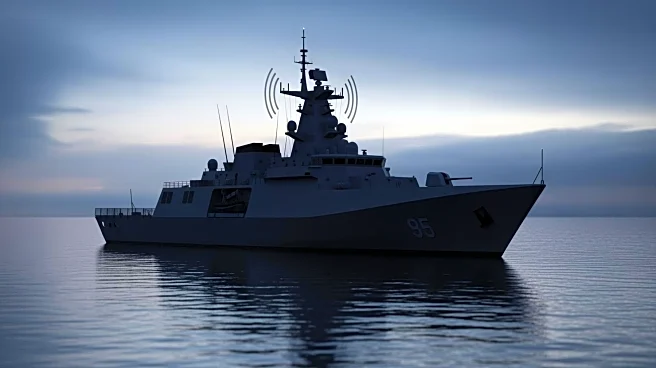
The United States is currently engaged in a significant military build-up in the Middle East, aiming to pressure Iran into limiting its nuclear capabilities. This development has caught the attention of China, which has deployed its advanced spy ship,
the Liaowang-1, to the Persian Gulf. The ship is equipped with sophisticated radars and signal collection instruments, potentially allowing China to gather valuable intelligence on American weapon systems in the region. This move comes as China maintains its position as a key ally to Iran, being its largest trading partner and a supplier of military equipment. The deployment of the Liaowang-1 suggests that China is closely monitoring the situation, possibly to assist Iran in the event of a conflict.
Why It's Important?
The deployment of China's spy ship in the Persian Gulf highlights the complex geopolitical dynamics at play. For the United States, this development could mean that its military strategies and technologies are being scrutinized by a major global power, potentially affecting its operational security. For China, the intelligence gathered could enhance its military capabilities and provide strategic advantages in the Indo-Pacific region. Additionally, China's involvement underscores its vested interests in the Middle East, particularly in maintaining its energy supplies and supporting its ally, Iran. This situation could lead to increased tensions between the US and China, impacting global diplomatic relations and economic stability.
What's Next?
As tensions continue to rise, the international community will be closely watching the actions of the US, Iran, and China. The US may need to reassess its military strategies in the region to mitigate the risk of intelligence leaks. Meanwhile, China might continue to bolster its presence in the Persian Gulf, potentially leading to further military collaborations with Iran. Diplomatic efforts may be necessary to prevent an escalation into active conflict, with potential involvement from other global powers to mediate the situation. The outcome of these developments could significantly influence future US-China relations and the stability of the Middle East.
Beyond the Headlines
The presence of China's spy ship in the Persian Gulf also raises ethical and legal questions regarding international surveillance and military intelligence gathering. The deployment could be seen as a provocative act, challenging international norms and potentially leading to calls for stricter regulations on military activities in international waters. Furthermore, the situation highlights the ongoing struggle for influence in the Middle East, with major powers vying for strategic advantages. This could lead to long-term shifts in alliances and power dynamics, affecting global security and economic policies.