




What's Happening?
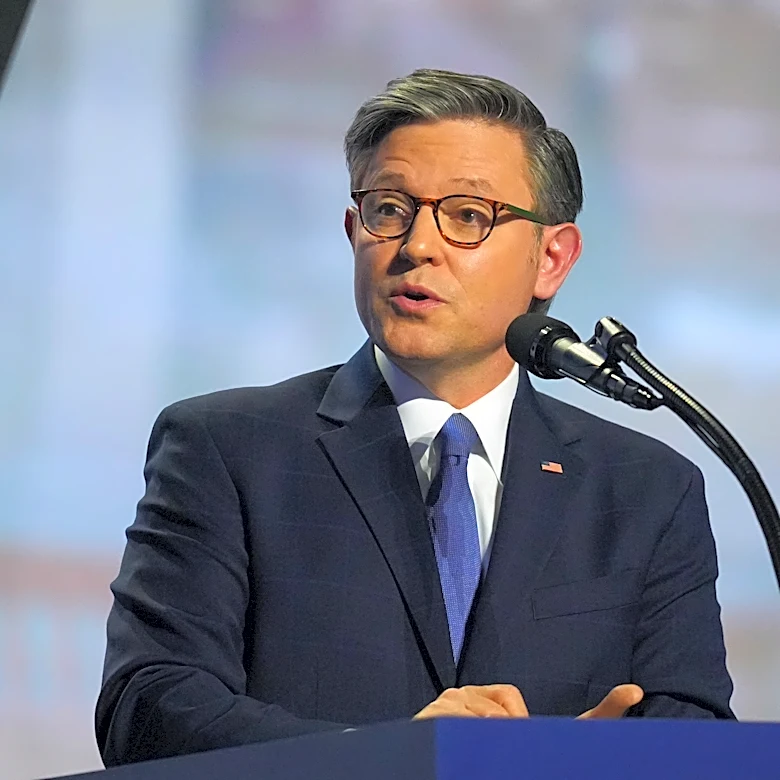
House Speaker Mike Johnson appeared on CNN's 'State of the Union' to discuss various pressing issues, including the regulation of artificial intelligence (AI) and his endorsement of House candidate Brandon Herrera. During the interview, CNN host Jake
Tapper confronted Johnson with uncensored footage of Herrera making offensive remarks about women and children. Johnson condemned Herrera's comments but defended his endorsement, stating that Herrera had apologized and was now running a serious campaign for Congress. Johnson emphasized that Herrera's past online persona as a 'podcaster and a provocateur' was distinct from his current role as a congressional candidate. He also highlighted Herrera's focus on issues like saving America, preserving freedom, and reducing costs for American citizens, positioning him as a superior candidate to his opponent, Katy Padilla Stout. The discussion also touched upon the broader political landscape, with Johnson asserting that Republicans are focused on common-sense solutions compared to what he described as the 'insurgent Marxist socialist left' within the Democratic Party.
Why It's Important?
Speaker Johnson's defense of a controversial candidate underscores the complexities and potential risks associated with political endorsements, particularly when a candidate's past statements are brought to light. This situation highlights the ongoing challenge for political parties to balance candidate support with public scrutiny and ethical considerations. The exchange also reflects the current polarized political environment, where accusations of extremism are frequently exchanged between parties. Johnson's characterization of the Democratic Party as being influenced by 'Marxist socialist' ideologies indicates a strategy to draw sharp contrasts for the upcoming midterms, aiming to mobilize his base by framing the election as a choice between 'common sense and crazy.' This rhetoric can further entrench partisan divisions and influence voter perception of both individual candidates and the broader political landscape. The incident also brings into focus the role of media in holding political figures accountable for their endorsements and the past actions of those they support.
What's Next?
The controversy surrounding Brandon Herrera's past remarks and Speaker Johnson's continued endorsement is likely to remain a talking point in the lead-up to the midterm elections. Opponents of Herrera and Johnson will likely use the uncensored footage and Johnson's defense to question the judgment and values of the Republican Party. Herrera's campaign will face continued pressure to address these past comments, and his ability to convince voters that he has genuinely changed his persona will be crucial. For Speaker Johnson, the incident could lead to further questions about the vetting process for endorsed candidates and the standards he applies to those he supports. The broader political discourse will likely continue to feature strong rhetoric from both sides, with Republicans emphasizing economic policies and national security, and Democrats focusing on social issues and the character of candidates. The outcome of Herrera's election will serve as a test of how much voters weigh a candidate's past controversial statements against their current political platform and endorsements.
Beyond the Headlines
This event delves into the evolving nature of political candidacy in the digital age, where past online activities, even those from years ago, can resurface and significantly impact a campaign. The 'podcaster and provocateur' defense used by Speaker Johnson highlights a growing trend where individuals with backgrounds in online content creation, often characterized by unfiltered or provocative commentary, transition into mainstream politics. This raises questions about the standards of conduct expected from public figures and whether a clear distinction can be drawn between an online persona and a serious political candidate. Furthermore, the incident touches upon the ethical responsibilities of political leaders in endorsing candidates, particularly when those candidates have a history of making offensive statements. It also prompts a broader societal discussion about accountability, forgiveness, and the extent to which past actions should define an individual's future opportunities, especially in the realm of public service. The media's role in unearthing and presenting such content also plays a critical part in shaping public opinion and influencing political outcomes.