





What's Happening?
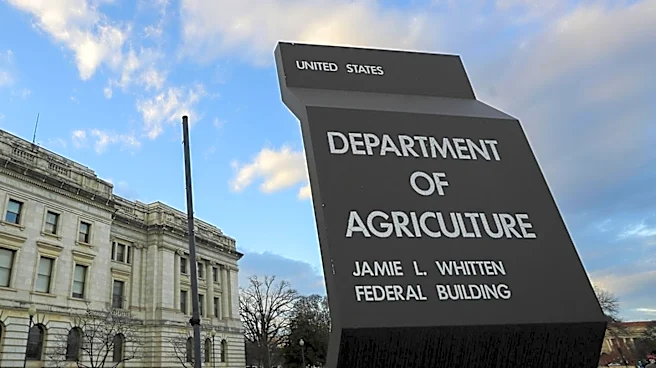
A Government Accountability Office (GAO) report, released on November 9, 2026, has found that the U.S. Department of Agriculture's (USDA) recent reorganization lacked a clear account of the rationale behind the changes. The report, prepared for ranking
members of the Senate and House agriculture committees, examined Secretary of Agriculture Brooke Rollins’ July 24, 2025, reorganization memorandum. This memorandum outlined four key pillars: aligning workforce size with financial resources, relocating resources outside the National Capital Region, eliminating management layers, and consolidating support functions. The plan called for relocating at least 2,600 of 4,600 headquarters and National Capital Region staff to five hub locations and other cities. Despite repeated requests from the GAO since September 2025 for documentation of any analysis supporting these decisions, the USDA only provided raw daily attendance counts for four buildings and a 2024 report on Forest Service finances. The GAO concluded that this information did not constitute analysis informing the specific decisions, leading to concerns that Congress and the public remain unaware of the reorganization's potential effects on service delivery, economic costs, or taxpayer protection.
Why It's Important?
The GAO's findings highlight a significant lack of transparency in a major federal agency's restructuring, which has substantial implications for national health security and agricultural operations. The USDA's responsibilities include border inspections for pests and pathogens, monitoring foreign animal diseases, and milk testing for H5N1. A reorganization without clear analytical backing raises questions about the potential compromise of these critical functions. The report also notes a significant reduction in the USDA's workforce, with headcount falling from approximately 91,000 in December 2024 to fewer than 73,000 in March 2026. While some of these reductions were due to presidential directives, the lack of planning for critical skills and competencies before downsizing, as identified by the GAO, could severely impact the department's ability to perform its duties. Agencies with vital biosecurity and food safety roles, such as the Animal and Plant Health Inspection Service (APHIS), Agricultural Research Service, and Food Safety and Inspection Service, experienced significant staff reductions, potentially affecting their capacity to respond to animal disease outbreaks and ensure food safety.
What's Next?
A federal judge has already halted much of the reorganization on October 13, finding that unions suing the USDA were likely to prove it violated a provision in this year’s appropriations law requiring congressional approval for reorganization. The USDA is appealing this decision to the Ninth Circuit. However, the stay may be short-lived as the provision is part of a continuing resolution set to expire on December 11. Congress will need to decide whether to extend this provision. Before making that decision, lawmakers are urged to demand the analysis that the GAO could not obtain, specifically regarding the impact on service delivery, economic effects, property disposal, and critical skills. The report suggests that rebuilding specialized staff, such as veterinary epidemiologists and laboratory personnel, could take years, drawing parallels to previous relocations where agencies experienced significant staff departures and productivity declines for extended periods. The ongoing legal challenges and congressional deliberations will determine the future of the USDA's reorganization and its potential long-term effects on the agency's operations and the services it provides.
Beyond the Headlines
The controversy surrounding the USDA's reorganization extends beyond administrative efficiency, touching upon the fundamental principles of government accountability and public trust. The USDA's combative response, labeling the GAO's review as 'partisan, politicized and incomplete,' underscores a potential breakdown in inter-agency cooperation and transparency. This situation raises broader questions about the balance of power between executive agencies and oversight bodies like the GAO, and the extent to which federal departments are obligated to provide detailed justifications for significant operational changes. The impact on biosecurity is a particularly critical, less obvious implication. With a fifth of the USDA's workforce gone and significant reductions in agencies responsible for animal and plant health, the nation's ability to detect and respond to emerging threats, such as H5N1 in dairy cattle, could be compromised. The report implicitly highlights the ethical responsibility of government to ensure that reorganizations do not inadvertently weaken essential public services, especially those related to health and safety, without a clear, publicly defensible rationale.