

What's Happening?
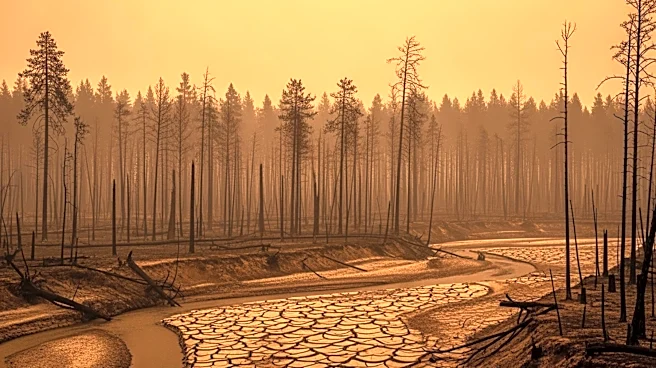
Wildfires in Georgia have destroyed dozens of homes, illustrating the increasing frequency and intensity of such events in the eastern U.S. Researchers attribute the rise in wildfires to climate change, which has led to drier conditions and more flammable
fuel. The current fires are fueled by drought, dead trees from past hurricanes, and dense forests. This year, the U.S. has seen a significant increase in wildfire activity, with 2,802 square miles burned, much of it in atypical areas like Nebraska. Fire scientists warn that the East is experiencing more intense fires, with a growing number of large wildfires affecting populated areas.
Why It's Important?
The wildfires in Georgia highlight the shifting dynamics of fire risk in the U.S., with the East becoming increasingly vulnerable. The destruction of homes and displacement of residents underscore the immediate human impact, while the economic implications include potential losses in agriculture and timber industries. The situation raises concerns about climate change and its role in exacerbating drought conditions, which contribute to the frequency and intensity of wildfires. The need for effective disaster management and preparedness strategies is critical to mitigate future risks and protect vulnerable communities.
Beyond the Headlines
The increasing wildfire activity in the East challenges traditional perceptions of fire risk in the U.S., which have focused on the West. The situation underscores the need for tailored fire management strategies that consider the unique environmental and social factors of the region. The role of climate change in driving these changes highlights the importance of addressing environmental issues at a policy level. The fires also emphasize the need for community resilience and adaptation measures to protect against future disasters.