



What's Happening?
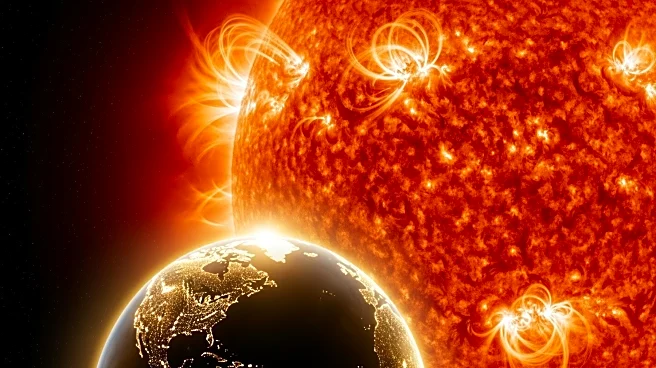
The Space Weather Prediction Center (SWPC) of the National Oceanic and Atmospheric Administration (NOAA) is currently monitoring a significant solar radiation storm, the largest of its kind since 2003. This storm, which began affecting Earth on Monday,
is caused by charged particles from the sun and has been classified as a level 4 out of 5 in terms of severity. Unlike geomagnetic storms, which are caused by coronal mass ejections and can create auroras, solar radiation storms primarily pose increased radiation exposure risks. The SWPC is actively informing NASA and other relevant agencies about the potential impacts of this storm, which is expected to persist for a few days before weakening.
Why It's Important?
The occurrence of such a strong solar radiation storm is significant due to its potential impact on both human activities and technological systems. Astronauts and space missions are particularly vulnerable to increased radiation exposure, which can pose health risks and affect mission operations. Additionally, electrical equipment on Earth, including power grids, can be disrupted by the storm's effects. Historical precedents, such as the 2003 storm, resulted in power system damages in countries like Sweden and South Africa, leading to outages. The current storm's monitoring and communication efforts by NOAA are crucial in mitigating potential disruptions and ensuring preparedness among affected sectors.
What's Next?
As the solar radiation storm continues, the SWPC will maintain close observation and provide updates to NASA and other agencies. The storm is expected to weaken over the coming days, reducing its potential impact. However, ongoing assessments will determine if any additional protective measures are necessary for astronauts or sensitive equipment. The situation underscores the importance of continued research and monitoring of space weather phenomena to better predict and manage their effects on Earth and space activities.