







What's Happening?
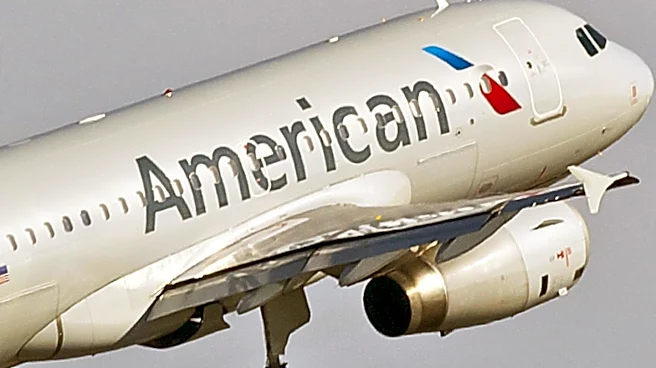
American Airlines will pay $200,000 to settle a disability discrimination lawsuit brought by the U.S. Equal Employment Opportunity Commission (EEOC). The lawsuit alleged that American Airlines failed to provide a reasonable accommodation to an employee
at its Fort Worth location after she developed cortical blindness. According to the EEOC, the employee requested to use screen reader software or be transferred to another position as a reasonable accommodation to perform her job duties. However, American Airlines allegedly kept her on unpaid, involuntary leave for nearly four years and then fired her, failing to facilitate her return to work. The EEOC asserted that this conduct violated the Americans with Disabilities Act (ADA), which mandates employers to provide reasonable accommodations for known disabilities unless it causes undue hardship.
Why It's Important?
This settlement underscores the critical importance of the Americans with Disabilities Act (ADA) in protecting employees with disabilities and highlights the EEOC's role in enforcing these protections. The case serves as a significant reminder to employers that they have a legal obligation to engage in an interactive process with employees to identify and implement reasonable accommodations for disabilities. Failure to do so can result in substantial penalties and legal action. The $200,000 monetary relief to the affected employee, coupled with American Airlines' commitment to integrate Web Content Accessibility Guidelines into its new reservation software, demonstrates the tangible consequences of non-compliance and the broader impact on corporate practices. This outcome reinforces the principle that employers must actively work to enable employees with disabilities to perform their jobs, rather than placing them on indefinite leave or terminating their employment.
What's Next?
Under the two-year consent decree resolving this lawsuit, American Airlines will pay $200,000 in monetary relief to the employee. Additionally, the airline has committed to integrating the Web Content Accessibility Guidelines into the development of its new, accessible reservation software, which is projected to launch in 2027. This commitment indicates a proactive step towards improving accessibility within the company's systems. The EEOC will likely monitor American Airlines' compliance with the terms of the consent decree. This settlement may also encourage other companies, particularly those in the aviation and technology sectors, to review their own accessibility policies and practices to ensure full compliance with the ADA and prevent similar legal challenges.
Beyond the Headlines
This case extends beyond a simple financial settlement, touching upon the broader societal goal of inclusive employment for individuals with disabilities. The employee's request for screen reader software highlights the increasing reliance on technology in the workplace and the necessity for employers to ensure their systems are accessible. American Airlines' commitment to integrating Web Content Accessibility Guidelines into its new software development is a significant step, potentially setting a standard for other large corporations. This move could foster a more inclusive digital environment within the company and, by extension, in the broader industry. The lawsuit also brings to light the emotional and financial toll on individuals who face discrimination due to disability, emphasizing the importance of robust legal frameworks like the ADA to ensure equal opportunities and prevent prolonged periods of unpaid leave or wrongful termination.