






What's Happening?
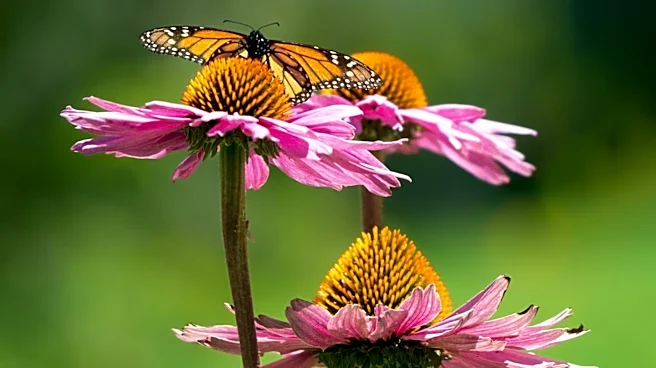
Experts are providing seven key recommendations for U.S. gardeners to support monarch butterflies during their August migration. These recommendations include planting late-season nectar-rich plants like Joe Pye weed, sneezeweed, and fall-blooming asters
and goldenrod, which provide essential calories for their long journey. Gardeners are also advised to plant native milkweed, the sole host plant for monarch eggs, and to consider creating layered habitats with sunny basking spots and sheltered areas. The advice emphasizes allowing plants to mingle and maintaining 'messy' garden areas with leaf piles and brush, as monarchs prefer less manicured environments. Crucially, experts strongly advise against the use of pesticides, which indiscriminately kill butterflies and other beneficial insects. The goal is to create a continuous 'all-season buffet' of resources for the migrating butterflies.
Why It's Important?
The monarch butterfly migration is an iconic natural phenomenon in the U.S., with butterflies traveling thousands of miles to breeding grounds in Mexico and California. This guidance for gardeners is critical because monarch populations have faced significant declines, making them an endangered species. The loss of natural habitats and food sources along their migratory routes poses a severe threat to their survival. By encouraging individual gardeners to create butterfly-friendly environments, these efforts contribute to a larger network of 'habitat corridors' across neighborhoods and communities. This collective action is vital for sustaining the monarch population, which plays a role in pollination and serves as an indicator of ecosystem health. The initiative also raises public awareness about conservation and the impact of human activities, such as pesticide use, on wildlife.
What's Next?
Gardeners are encouraged to implement these practices immediately, particularly focusing on planting late-season nectar sources and milkweed, as August is a crucial month for the monarch migration. Conservation groups like Monarch Watch will continue their tagging programs and educational outreach to track and support these butterflies. The long-term success of these efforts depends on sustained community involvement and adherence to eco-friendly gardening practices. Future initiatives may involve broader public education campaigns, partnerships with nurseries to promote native plants, and policy discussions regarding pesticide use. The hope is that increased public participation will lead to a rebound in monarch populations, ensuring the continuation of their remarkable migration for future generations.
Beyond the Headlines
The plight of the monarch butterfly extends beyond ecological concerns, touching upon cultural and ethical dimensions. The monarch's epic journey symbolizes resilience and the interconnectedness of ecosystems across North America. Its decline serves as a poignant reminder of the broader biodiversity crisis and the impact of human development on natural systems. The call for 'messy' gardens challenges conventional aesthetic norms, promoting a shift towards more ecologically functional landscapes. This movement encourages a re-evaluation of what constitutes a 'beautiful' garden, advocating for spaces that support wildlife rather than solely serving human preferences. Furthermore, the emphasis on avoiding pesticides highlights a growing ethical consideration for non-target species in agricultural and gardening practices, pushing for more sustainable and holistic approaches to land management.