
What's Happening?
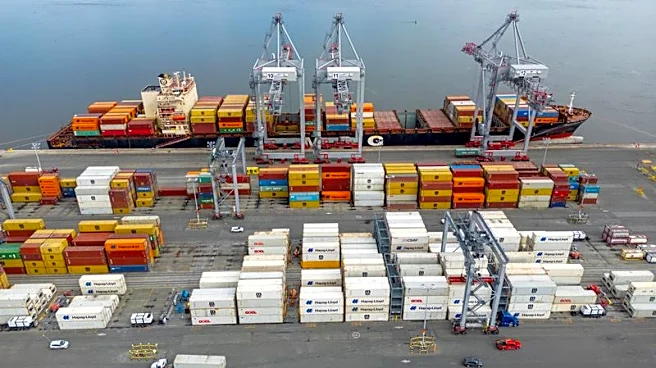
President Trump signed an executive order on August 13, implementing a 100% ad valorem duty rate on imported drones weighing over 25 kg, drones with integrated thermal imagers, docking stations, and specific
critical components. Smaller drones and other components will face a 25% tariff. These rates are set to take effect from September 3, with an additional band of components following on February 9, 2027. While close U.S. allies such as the European Union, Japan, South Korea, Taiwan, Switzerland, and Liechtenstein received a capped tariff of 15% (and British-made products at 10%), Ukraine was not included in this list. This means Ukrainian drones and components will be subject to the full 100% and 25% tariff bands. The proclamation does not provide a mechanism for adding countries to the reduced-rate list or an exemption for government procurement, including for the Department of War. The only relief offered is a 180-day delay for firms already on the Pentagon's Blue UAS cleared list or the Federal Communications Commission's conditional approval list, and a duty-free window for companies with an approved plan to build a U.S. plant.
Why It's Important?
This new tariff policy significantly impacts the drone industry, particularly for Ukraine, which is currently engaged in a drone war. Despite Washington's previous negotiations to purchase Ukrainian drones at scale and statements of intent for joint production, the tariff schedule places Ukrainian manufacturers at a considerable disadvantage compared to other allied producers. The policy prioritizes domestic manufacturing, encouraging companies to establish production facilities within the United States. This could lead to a shift in global drone manufacturing, with potential job creation and technological development within the U.S. However, it also raises concerns about the immediate impact on Ukraine's ability to export its combat-tested drones and components, potentially hindering its war efforts. The move could also reshape supply chains and international partnerships in the drone sector, as companies re-evaluate their manufacturing and export strategies to comply with the new tariff structure.
What's Next?
The tariffs will take effect on September 3, 2024, for most items, with additional components affected in February 2027. The Kyiv Independent reported on August 14 that the implications of this duty on previously discussed drone sales and joint production agreements between the U.S. and Ukraine remain unclear. While the proclamation does not explicitly provide a route for Ukraine to be added to the reduced-rate list, a later proclamation could amend it. The policy strongly incentivizes manufacturing within the United States, suggesting that Ukrainian manufacturers may need to establish joint ventures with American partners and localize production in the U.S. to secure future Pentagon contracts. The Association for Uncrewed Vehicle Systems International has urged the Commerce Department to clarify the 'onshoring pathways' for companies building U.S. production capacity. This indicates a potential acceleration of domestic drone manufacturing and a re-evaluation of international drone supply chains.
Beyond the Headlines
The tariff policy, while ostensibly aimed at correcting an imbalance caused by subsidized adversary-built drones, carries deeper implications for international defense cooperation and technological sovereignty. By effectively compelling foreign manufacturers to establish U.S. production, the policy could lead to a significant transfer of technology and expertise to the United States. This could bolster the U.S. defense industrial base and reduce reliance on foreign suppliers for critical drone technology. However, it also raises questions about the long-term impact on allied nations, particularly those like Ukraine that are actively engaged in conflict and rely on their domestic production capabilities. The policy could be seen as a strategic move to secure U.S. leadership in drone technology and manufacturing, but it also highlights the complex interplay between trade policy, national security, and international alliances. The emphasis on 'build it here' could reshape global technological partnerships and influence future defense procurement strategies.