







What's Happening?
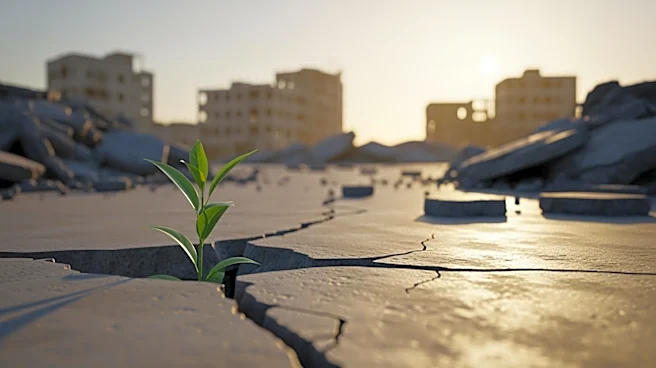
Six months following a ceasefire intended to halt the conflict and facilitate aid, residents of Gaza report that recovery efforts have yet to commence. Despite the promise of peace and international assistance, the region remains in a state of stagnation,
with little progress visible on the ground. The ceasefire, which was expected to bring relief and reconstruction, has not translated into tangible improvements for the people living in Gaza. NPR’s Anas Baba highlights the ongoing challenges faced by the population, who continue to endure the aftermath of the conflict without the anticipated support and rebuilding efforts.
Why It's Important?
The situation in Gaza underscores the complexities of post-conflict recovery in regions affected by prolonged violence. The lack of progress in rebuilding efforts not only affects the immediate living conditions of the residents but also has broader implications for regional stability and international relations. The failure to deliver on promises of aid and reconstruction can lead to increased frustration and potential unrest, complicating peace efforts and diplomatic negotiations. This scenario highlights the critical need for effective international intervention and support to ensure that ceasefires lead to sustainable peace and development.
What's Next?
The international community faces the challenge of addressing the unmet needs in Gaza to prevent further deterioration of the humanitarian situation. Stakeholders, including governments and aid organizations, must reassess their strategies to ensure that aid reaches those in need and that reconstruction efforts are effectively implemented. Continued monitoring and pressure from global entities may be necessary to hold parties accountable and to facilitate the flow of resources into the region. The success of these efforts will be crucial in determining the long-term stability and recovery of Gaza.