








What's Happening?
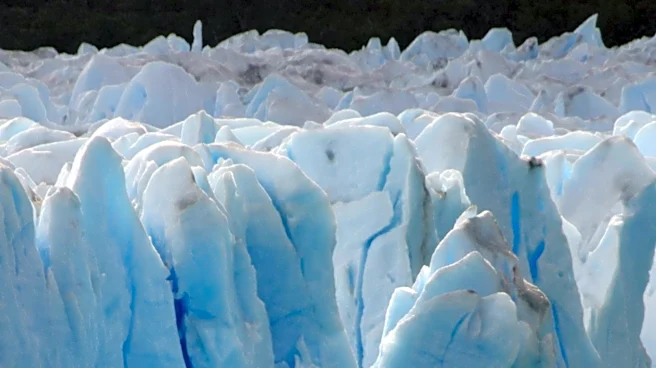
A new study has quantified the impact of human-driven climate change on the retreat of the Pine Island Glacier in Antarctica. Using satellite imagery and advanced modeling, researchers from King's College London and the British Antarctic Survey found
that greenhouse gas emissions have increased the glacier's retreat by 18-20% since the 1940s. The study, published in The Cryosphere, provides one of the clearest attributions of a major Antarctic glacier's retreat to human activity. The findings highlight the glacier's significant contribution to global sea level rise and underscore the urgent need for climate action.
Why It's Important?
The study's findings are critical as they provide concrete evidence of the role human activity plays in accelerating the melting of Antarctic glaciers. This has profound implications for global sea level rise, which poses a threat to coastal communities and ecosystems worldwide. The research underscores the importance of reducing greenhouse gas emissions to mitigate further ice loss and its associated impacts. It also highlights the need for international cooperation and policy measures to address climate change and protect vulnerable regions from its effects.
What's Next?
The study suggests that while the Pine Island Glacier may temporarily slow its retreat, continued warming could lead to further destabilization. This emphasizes the need for sustained efforts to reduce emissions and limit global temperature rise. Policymakers and climate scientists will likely use these findings to advocate for stronger climate action and to inform future climate models and projections. The study also calls for increased monitoring and research to better understand the complex interactions between ice sheets and the ocean, which are crucial for predicting future changes in sea level.