







What's Happening?
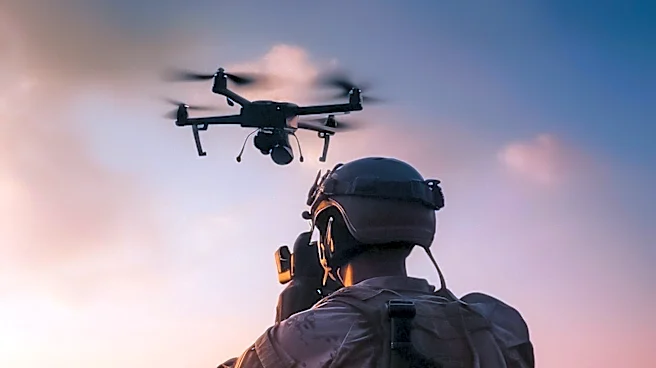
Despite rapid advancements in general-purpose AI, the U.S. military is advised to continue training and maintaining a large number of drone pilots for the foreseeable future. This recommendation stems from the current limitations of AI models, which still
exhibit brittleness in unpredictable and contested environments. While militaries are racing to field sophisticated autonomous drones, current systems cannot consistently execute complex missions without human control. General-purpose AI models, such as large language models, hold promise for enabling autonomous systems to receive plain language commands and make complex decisions, but they currently lack the necessary capabilities and processing speed for reliable real-world battlefield performance. Technical feasibility does not yet guarantee operational usefulness, as AI models need to be small and fast enough to operate locally at the tactical edge, especially where internet and cloud access are degraded or denied.
Why It's Important?
This assessment is crucial for U.S. military planning, as it highlights the gap between theoretical AI capabilities and practical battlefield application. Over-reliance on nascent AI autonomy could lead to significant operational vulnerabilities in contested environments. Maintaining a robust force of human drone pilots ensures operational continuity and adaptability where AI systems may fail or be compromised. Furthermore, the report emphasizes that the most sophisticated AI models often require external computing power, making them susceptible to jamming or exploitation. Smaller, onboard models, while less vulnerable, offer narrower capabilities. This trade-off necessitates a balanced approach, ensuring that human expertise remains central to drone operations while AI capabilities mature. The U.S. military's ability to effectively integrate human and AI capabilities will be a decisive factor in future conflicts.
What's Next?
The Pentagon should lay the groundwork for fielding more advanced autonomous systems by developing evaluations to test whether these systems can meet human decision-making standards under harsh real-world conditions. Given the uncertainty regarding which technical paradigms will deliver the most robust drone autonomy, the military should experiment with a variety of model types and compute configurations. Additionally, programs should be developed to collect and share high-quality data for training autonomy models. U.S. policymakers are urged to secure an American lead in drone autonomy by encouraging models suitable for edge deployment and restricting adversary access to leading American chips. This includes supporting funding for general-purpose AI that U.S. military and defense industry developers can freely customize for defense applications.
Beyond the Headlines
The ongoing debate about the role of AI in drone autonomy touches upon broader ethical and strategic implications. The continued necessity of human pilots underscores the current limitations of AI in complex, high-stakes decision-making, particularly in situations involving unpredictable variables and ethical dilemmas. This also highlights the potential for a 'human-in-the-loop' or 'human-on-the-loop' approach to autonomous weapons systems, where human oversight remains critical. The competition for AI dominance, particularly in military applications, also raises concerns about global stability and the potential for an AI arms race. The emphasis on restricting adversary access to advanced chips and promoting U.S.-developed AI models reflects a strategic imperative to maintain technological superiority and mitigate national security risks associated with foreign technology dependencies.