





What's Happening?
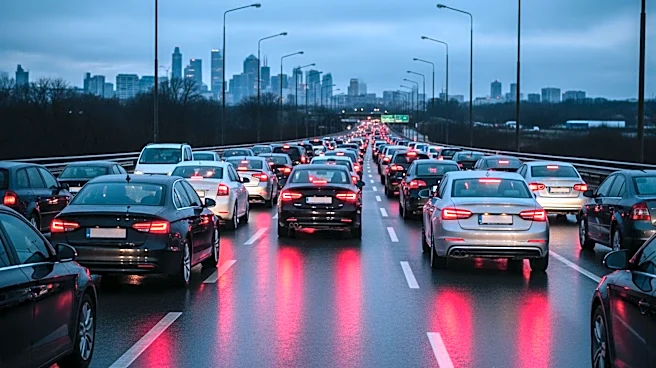
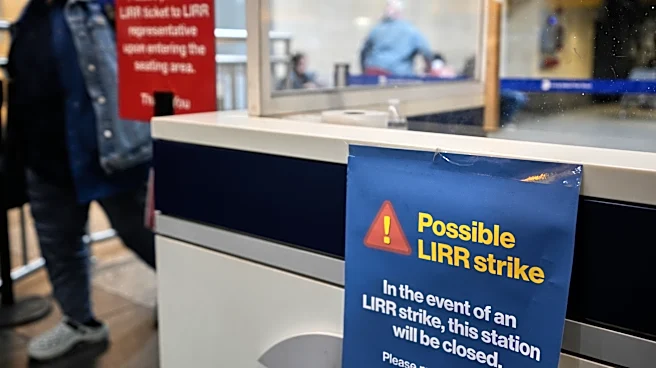
A strike by the Long Island Rail Road (LIRR) has resulted in significant commuting delays for drivers attempting to reach New York City. The disruption has led to hours-long commutes as drivers face increased traffic congestion. Larry Levy, the Executive
Dean of the National Center for Suburban Studies at Hofstra University, has commented on the impact of the strike, highlighting the challenges faced by commuters who rely on the LIRR for their daily travel. The strike has forced many to seek alternative routes, exacerbating traffic issues and causing widespread frustration among those affected.
Why It's Important?
The LIRR strike underscores the critical role that public transportation plays in the daily lives of New Yorkers and the broader metropolitan area. With the LIRR being a major transit option for thousands of commuters, its disruption has a ripple effect on traffic patterns and the overall efficiency of the region's transportation network. The strike highlights the vulnerability of the system to labor disputes and the need for contingency planning to mitigate such impacts. The economic implications are significant, as delays can affect productivity and increase costs for businesses and individuals alike.
What's Next?
As the strike continues, stakeholders including city officials, transportation authorities, and labor representatives are likely to engage in negotiations to resolve the dispute. Commuters may need to continue seeking alternative transportation options, such as carpooling or using other public transit systems, until a resolution is reached. The situation may prompt discussions on improving infrastructure resilience and exploring additional transportation solutions to prevent similar disruptions in the future.