

What's Happening?
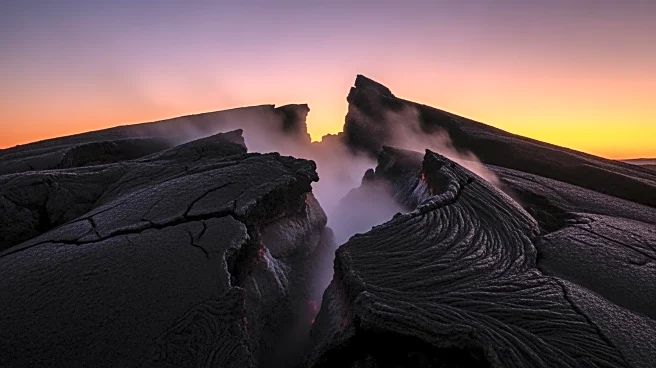
The Taftan volcano in southeastern Iran has shown signs of activity for the first time in 700,000 years, according to a recent study. Satellite data has revealed that the ground near the summit has risen by approximately 3.5 inches over a ten-month period,
indicating pressure buildup. The study, led by Pablo J. González from the Spanish National Research Council, utilized InSAR radar technology to monitor ground motion from space. The uplift suggests that gases are accumulating in the hydrothermal system beneath the volcano, rather than fresh magma reaching the surface. The Taftan volcano, a stratovolcano, has not erupted in recorded human history, but the recent changes indicate that it is stirring and requires close observation.
Why It's Important?
The potential reactivation of the Taftan volcano poses significant risks to nearby communities, particularly the city of Khash, which is located about 31 miles away. The main hazards include phreatic blasts, which are steam-driven explosions that can occur when hot fluids vaporize near the surface. These explosions can release gases that may affect air quality and agriculture in the region. The study serves as a wake-up call for local authorities to allocate resources for monitoring and preparedness. Continuous monitoring of gas emissions and ground movement is crucial to anticipate any further developments and ensure public safety.
What's Next?
Scientists plan to conduct further measurements of gas emissions at the volcano's vents and slopes to assess pressure changes. They also recommend establishing a network of seismometers and GPS units to monitor seismic activity and ground deformation. Satellite observations will continue to provide updates on ground movement. Local authorities are advised to develop evacuation plans, hazard maps, and public guidance to prepare for potential volcanic activity. The study emphasizes the importance of proactive monitoring to mitigate risks and protect nearby communities.
Beyond the Headlines
The Taftan volcano is situated in a tectonic subduction zone, where one plate slides under another, creating magma and gas-rich fluids. This geological setting contributes to the potential for volcanic activity. The study highlights the importance of satellite technology in monitoring remote and inaccessible areas, providing valuable data for early warning systems. The findings underscore the need for continuous and comprehensive monitoring to prevent surprises and ensure timely responses to volcanic threats.