
What's Happening?
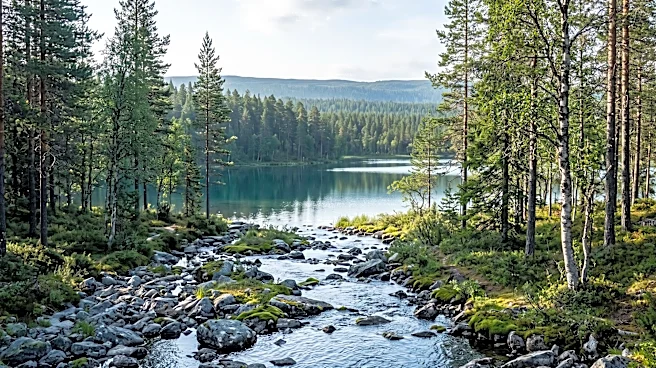
New research published in Geophysical Research Letters indicates that lakes play a more significant role in the global carbon cycle than previously understood. A study of 32 connected stream-and-lake networks
in northern Sweden found that the more lake-rich a network is, the more carbon is released into the atmosphere as carbon dioxide rather than being transported downstream. Networks with ten times more lake surface area exhibited nearly double the carbon emissions. This phenomenon is attributed to the increased 'network residence time' of water in lake-rich systems, allowing more time for chemical and biological processes, particularly microbial breakdown of dissolved organic carbon, to convert carbon into CO2. The study emphasizes the need to consider streams and lakes as integrated networks rather than separate entities when assessing carbon dynamics. Seasonal variations also impact these emissions, with higher rates observed during warmer, drier summer conditions when water flow is lower and carbon remains in the system longer.
Why It's Important?
This research is crucial for refining global carbon cycle models, which may have previously underestimated the contribution of inland waters, particularly lakes, to atmospheric carbon emissions. A more accurate understanding of these processes is vital for climate change projections and mitigation strategies. If lakes are indeed significant sources of CO2, then changes in hydrological conditions, such as those occurring with climate change in regions like the Arctic, could have unforeseen impacts on atmospheric carbon levels. Policymakers and environmental scientists will need to consider these findings when developing strategies for carbon sequestration and emission reduction. The study suggests that the physical structure and connectivity of aquatic networks are as important as the volume of water in determining carbon fate, potentially influencing land-use planning and water management practices in areas with extensive lake systems.
What's Next?
Future research will likely focus on validating these findings in diverse geographical regions and under varying climatic conditions to determine the global applicability of the Swedish study. Scientists may also investigate the specific microbial processes and environmental factors that drive carbon conversion in lakes to better predict future emission trends. This could lead to the development of more sophisticated models that integrate lake-stream network dynamics into broader climate models. Additionally, there may be a push for revised methodologies in carbon accounting that give greater weight to inland water systems. Understanding these dynamics could also inform conservation efforts, particularly in regions vulnerable to hydrological changes, to mitigate potential increases in carbon emissions from aquatic ecosystems.
Beyond the Headlines
The study's implications extend beyond mere carbon accounting, touching upon the intricate balance of natural ecosystems. The finding that lakes amplify carbon emissions challenges the traditional view of lakes primarily as carbon sinks or passive water bodies. This shift in understanding could lead to a re-evaluation of how human activities, such as dam construction or land-use changes that alter water flow and lake connectivity, might inadvertently impact atmospheric carbon levels. It also highlights the complex interplay between hydrology, microbiology, and climate, underscoring the need for interdisciplinary approaches to environmental science. The research suggests that even seemingly minor alterations to aquatic landscapes could have cascading effects on the global carbon budget, emphasizing the interconnectedness of Earth's systems and the potential for unexpected feedback loops in a changing climate.