








What's Happening?
A study published by the RAND Corporation on October 28 examines how France, Germany, Poland, and the United Kingdom are preparing for a potential reduction in U.S. military engagement and a withdrawal of U.S. forces from Europe. The study indicates that
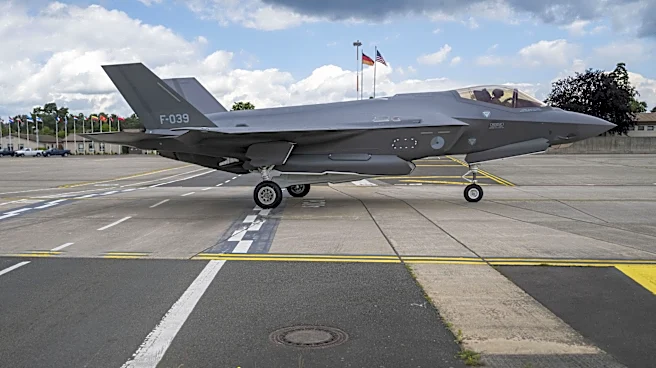
even governments deeply committed to the transatlantic relationship now view a U.S. conventional force withdrawal as inevitable. These nations are reportedly focusing less on preventing the withdrawal and more on slowing its implementation. They continue to emphasize Washington's indispensable role in their security and, in some instances, have offered to fund the continued presence of U.S. troops. The RAND report distinguishes between a coordinated, orderly U.S. withdrawal, which allies believe they can manage, and a rapid, uncoordinated withdrawal, which they fear would create significant capability gaps and potentially encourage Russian aggression against a NATO member state. Negotiations with Washington are therefore aimed at securing sufficient time for European armed forces to rebuild military assets they currently lack. In 2025, approximately 80,000 U.S. troops were stationed across thirty bases in Europe. Recent actions, such as the Pentagon's announcement in May of withdrawing about 5,000 troops from Germany and subsequent reductions in forces available to NATO, signal Washington's reorientation.
Why It's Important?
This RAND Corporation study highlights a significant shift in European defense strategy and perceptions regarding U.S. military commitment. The acknowledgment by key European allies that a U.S. withdrawal is inevitable signals a potential rebalancing of security responsibilities within NATO. This could lead to increased defense spending and greater military integration among European nations, impacting defense industries and strategic alliances. For the U.S., a reduced military footprint in Europe could free up resources for other geopolitical priorities, but it also raises questions about the future of NATO's collective defense and burden-sharing. The distinction drawn by allies between an orderly and a rapid withdrawal underscores the critical importance of strategic planning and coordination to avoid destabilizing the European security landscape. A rapid withdrawal could create a power vacuum, potentially emboldening adversaries and increasing regional instability, which would have long-term implications for U.S. foreign policy and global security interests. The willingness of some European nations to fund continued U.S. presence also indicates the perceived value of U.S. military capabilities and leadership.
What's Next?
The findings of the RAND Corporation study suggest that discussions between the U.S. and its European allies will likely intensify regarding the pace and scope of any potential U.S. military drawdown. European nations will continue to press for a phased and coordinated withdrawal to allow time for their own military capabilities to develop. This could involve increased investment in European defense initiatives, potentially leading to new procurement contracts for defense companies and greater interoperability efforts among European armed forces. The U.S. administration will need to carefully manage these expectations and balance its strategic reorientation with its commitments to NATO and European security. Future negotiations will likely focus on specific troop numbers, preserved capabilities, and mutually agreeable timelines. The study also implies that European leaders will continue to advocate for Washington's indispensable role in their security, even as they prepare for greater self-reliance. The outcome of these discussions will shape the future of transatlantic security cooperation and the operational readiness of NATO.
Beyond the Headlines
The RAND Corporation's analysis points to a deeper evolution in the transatlantic relationship, moving from an era of unquestioned U.S. military primacy in Europe to one where European nations are increasingly expected to shoulder more of their own defense burden. This shift could foster greater European strategic autonomy, potentially leading to a more unified European defense identity separate from, or complementary to, NATO. Ethically, it raises questions about the long-term commitment of the U.S. to its allies and the moral imperative of collective security. Legally, any significant troop movements or changes in defense agreements would require careful diplomatic navigation and adherence to existing treaties. Culturally, it could signify a move away from a post-World War II security paradigm, prompting European nations to re-evaluate their geopolitical standing and their role on the global stage. This development could also trigger long-term shifts in global power dynamics, with Europe potentially emerging as a more independent security actor, influencing international relations and global stability in new ways.