






What's Happening?
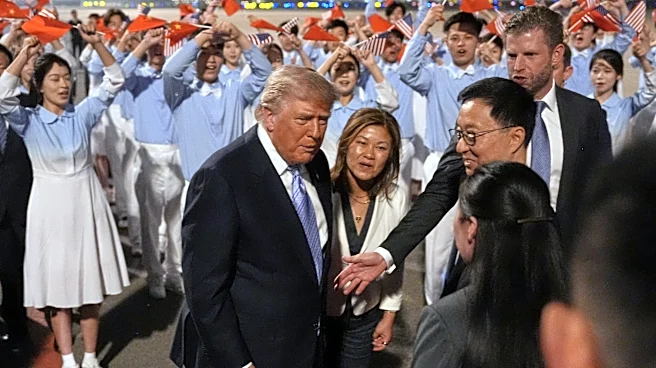
President Trump recently visited China for a summit with Chinese President Xi Jinping, marking his first visit to the country since 2017. The discussions focused on trade relations and the ongoing conflict involving Iran. Notably, Trump adopted a warmer
diplomatic tone, contrasting with his usual style characterized by blunt criticism and tariff threats. This approach was seen as a strategic move to foster cooperation amid existing tensions over trade and energy markets. The summit's tone and Trump's praise of Xi were highlighted by observers as a significant shift in his diplomatic posture.
Why It's Important?
The summit's outcome is crucial for U.S.-China relations, especially given the ongoing trade tensions and geopolitical issues in the Middle East. Trump's softer approach could signal a potential shift in U.S. foreign policy, aiming to ease tensions and foster collaboration with China. This could impact global trade dynamics, particularly in energy markets, as discussions included the possibility of China purchasing U.S. oil. The summit's tone may also influence future diplomatic engagements and economic policies between the two nations, affecting stakeholders in both countries.
What's Next?
Future developments may include further negotiations on trade agreements and energy cooperation between the U.S. and China. The diplomatic tone set by Trump could pave the way for more constructive dialogues, potentially leading to resolutions on trade disputes. However, the effectiveness of this approach will depend on China's response and the broader geopolitical context, including the situation in the Middle East. Stakeholders in international trade and energy sectors will be closely monitoring these developments.
Beyond the Headlines
The summit's implications extend beyond immediate trade discussions, touching on broader geopolitical strategies. Trump's approach may reflect a strategic pivot in U.S. foreign policy, aiming to balance assertiveness with diplomacy. This could influence global perceptions of U.S. leadership and its role in international affairs. Additionally, the summit highlights the complex interplay between economic interests and diplomatic relations, underscoring the challenges of navigating global power dynamics.