

What's Happening?
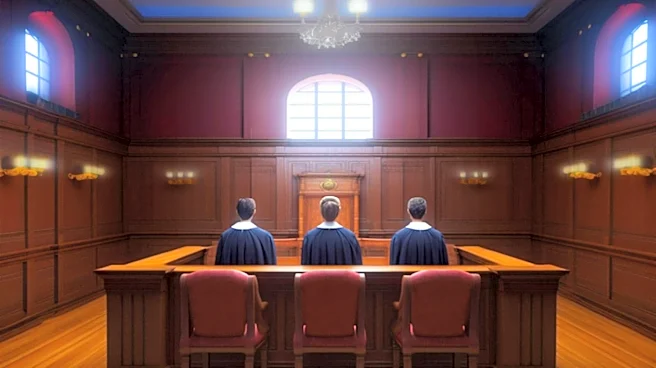
Torres Strait Islanders, led by community leaders Uncle Paul Kabai and Uncle Pabai Pabai, are challenging a Federal Court decision regarding the Australian government's duty of care in addressing climate change impacts. Initially, in 2021, the Islanders launched
proceedings to compel the government to reduce greenhouse gas emissions to protect their homes on Saibai and Boigu islands. In July 2025, Justice Michael Wigney acknowledged the scientific evidence of climate change impacts on the Torres Strait but ruled against the Elders, citing that negligence law does not cover government policy decisions. The Islanders have now appealed this decision, arguing that the government has a duty of care to protect vulnerable communities from climate change effects.
Why It's Important?
This case highlights the legal and ethical responsibilities of governments in addressing climate change, particularly for vulnerable communities like the Torres Strait Islanders. The outcome could set a precedent for how courts interpret government obligations under environmental law and policy. If successful, the appeal could compel the Australian government to take more aggressive action in reducing emissions and protecting communities at risk of becoming climate refugees. This case also underscores the broader global issue of climate justice, where marginalized groups often bear the brunt of environmental changes despite contributing the least to the problem.
What's Next?
The appeal hearing is ongoing, with the Islanders' legal team arguing that the government has assumed responsibility by setting emissions targets and must act to protect vulnerable communities. The court's decision could influence future climate litigation and policy-making in Australia. If the appeal is successful, it may lead to increased government accountability and more stringent climate policies. The case also raises questions about the adequacy of current legal frameworks in addressing the complex challenges posed by climate change.
Beyond the Headlines
The case brings attention to the cultural and existential threats faced by the Torres Strait Islanders, who risk losing their ancestral lands and cultural heritage due to rising sea levels. It also highlights the limitations of current legal systems in addressing climate change, as traditional negligence laws may not adequately cover the complexities of government policy decisions. This case could prompt a reevaluation of legal doctrines to better address environmental and cultural harms.