



What's Happening?
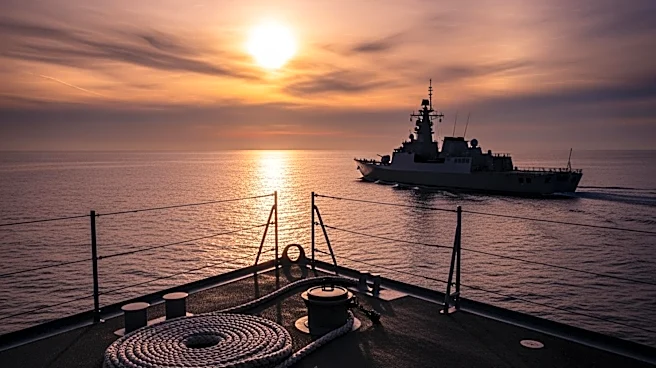
The U.S. military has significantly increased its presence near the Persian Gulf, deploying three carrier strike groups, marking the largest American naval concentration in the region since the 2003 Iraq invasion. This deployment is part of a broader
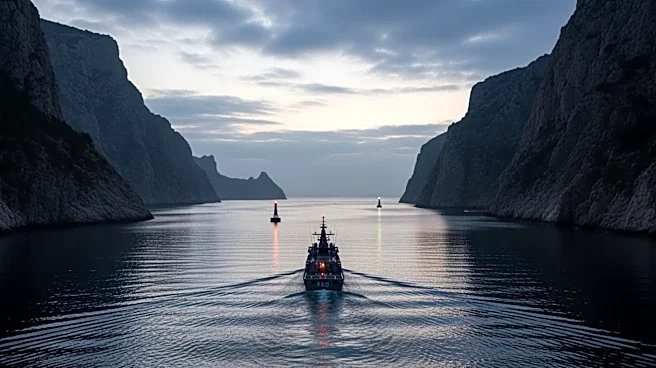
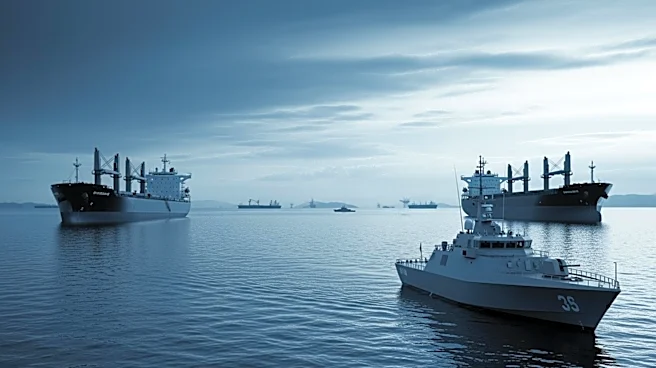
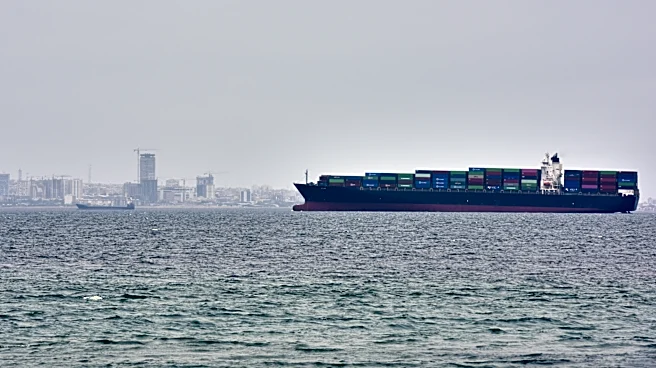
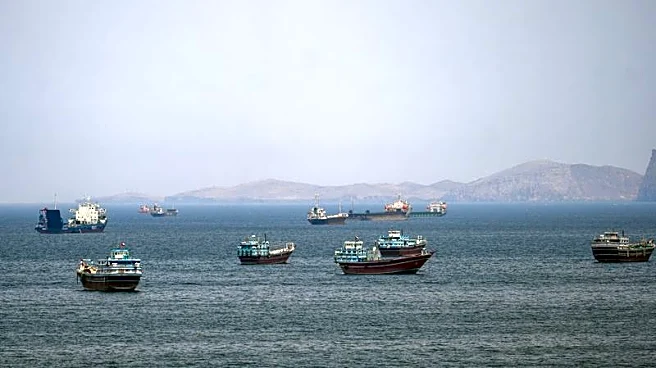
geopolitical standoff involving the closure of the Strait of Hormuz, a critical chokepoint for global oil supply. The closure results from simultaneous maritime restrictions enforced by both the United States and Iran. The U.S. has initiated a naval blockade targeting Iranian ports and oil export shipping, while Iran's Islamic Revolutionary Guard Corps Navy has responded by seizing commercial vessels and firing on others. This dual blockade has effectively shut down the strait, which normally handles approximately 20% of globally traded petroleum, leading to a significant disruption in global energy markets.
Why It's Important?
The closure of the Strait of Hormuz has profound implications for global energy markets, as it is a vital corridor for oil and liquefied natural gas exports from the Persian Gulf. The disruption affects major oil exporters like Saudi Arabia, Iraq, Kuwait, and the United Arab Emirates, as well as LNG exports crucial for Asian markets. The inability to transit through Hormuz has led to a scramble for alternative sources, driving up spot market prices and creating logistical bottlenecks. The geopolitical tension also raises the risk of broader military conflict, which could further destabilize the region and impact global energy security. The situation underscores the strategic importance of Hormuz and the vulnerability of global energy supply chains to geopolitical disruptions.
What's Next?
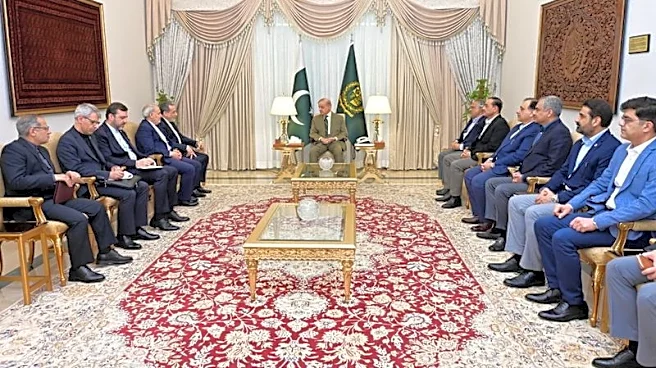
The ongoing standoff between the U.S. and Iran shows no immediate signs of resolution, with both sides maintaining their enforcement actions. Diplomatic efforts, such as those mediated by Pakistan, have collapsed, and Iran has set conditions for negotiations that the U.S. has not publicly addressed. The situation may continue to escalate, with potential for direct military confrontation if miscalculations occur. Regional powers like Oman are engaged in quiet diplomacy, but formal channels remain closed. The global energy market will likely face sustained stress, with countries drawing on strategic reserves and seeking alternative supply routes. The U.S. military's presence signals readiness for further escalation, keeping the risk of broader conflict a real possibility.
Beyond the Headlines
The closure of the Strait of Hormuz highlights the structural vulnerabilities in global energy supply chains, particularly the reliance on single chokepoints. The situation also reflects the complex interplay of regional politics, with countries like Oman and GCC states navigating their roles amid U.S.-Iran tensions. The dual blockade strategy employed by both nations demonstrates the use of maritime enforcement as a geopolitical tool, raising questions about the future of international maritime law and the security of global trade routes. The crisis may prompt long-term shifts in energy policy, encouraging diversification of supply sources and investment in bypass infrastructure to mitigate similar risks in the future.