






What's Happening?
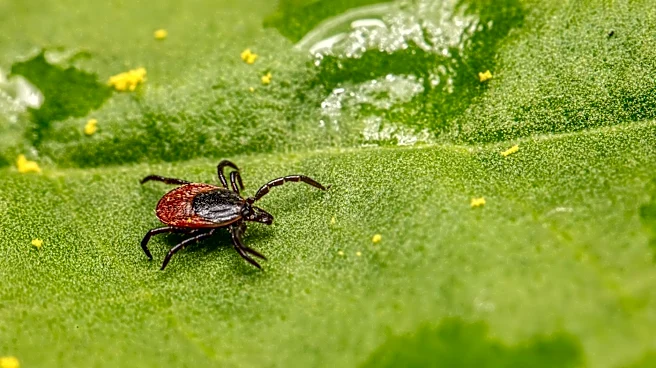
Rising temperatures in Georgia are extending the tick season, increasing the risk of tick-borne diseases such as Rocky Mountain spotted fever and Lyme disease. According to experts, the warmer climate allows ticks to become active earlier and spread to previously
too-cold areas. The Georgia Department of Public Health reports that tick-borne diseases are now being reported year-round, although peak activity remains from early spring through late fall. Public health officials advise avoiding tick habitats and using repellents to prevent bites.
Why It's Important?
The extension of tick season due to climate change poses a significant public health challenge, as it increases the potential for disease transmission. This development could lead to higher healthcare costs and a greater burden on public health systems. The spread of tick-borne diseases can affect outdoor activities and agriculture, impacting local economies. Understanding and mitigating these risks are crucial for public health planning and climate adaptation strategies.
What's Next?
Public health officials will continue to monitor tick activity and disease reports to assess the impact of climate change on tick-borne illnesses. Efforts to educate the public on prevention measures and early detection of symptoms will be essential in managing the increased risk. Research into climate adaptation strategies and tick control measures will be necessary to address the long-term implications of extended tick seasons.