






What's Happening?
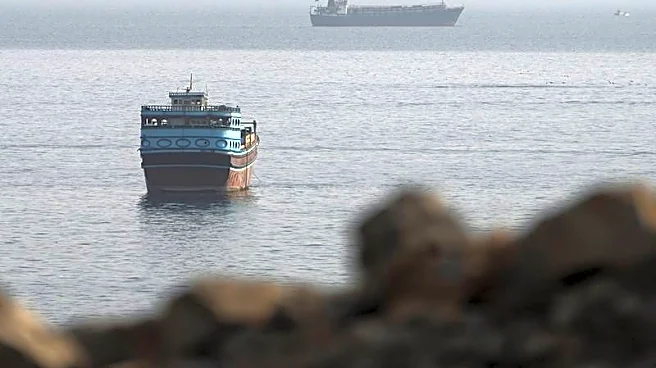
The closure of the Strait of Hormuz due to ongoing conflicts has significantly impacted Gulf states, leading to increased costs for importing essential goods. Shipping companies have imposed surcharges, and air freight is being used for high-value cargo,
but this is not feasible for bulk goods. The disruption has caused inflation in Gulf countries, affecting food and household goods prices. The crisis has also highlighted the region's dependency on the strait for energy exports, with countries like Qatar and Kuwait lacking alternative routes.
Why It's Important?
The shipping crisis underscores the vulnerability of Gulf economies to geopolitical tensions and their reliance on the Strait of Hormuz for trade. The increased costs and inflation could have long-term economic implications, affecting consumer prices and economic stability in the region. The situation also highlights the need for diversification of trade routes and infrastructure to mitigate such risks. The crisis may prompt Gulf states to invest in alternative logistics solutions, such as railways and pipelines, to reduce dependency on the strait.
What's Next?
Gulf states are likely to accelerate infrastructure projects to create alternative trade routes, such as the Gulf railway network and new port facilities. These efforts aim to enhance regional connectivity and reduce reliance on the Strait of Hormuz. The crisis may also lead to increased collaboration among Gulf countries to address shared economic challenges. Additionally, the situation could influence global energy markets, as countries seek to secure stable supply chains and reduce exposure to geopolitical risks.