






What's Happening?
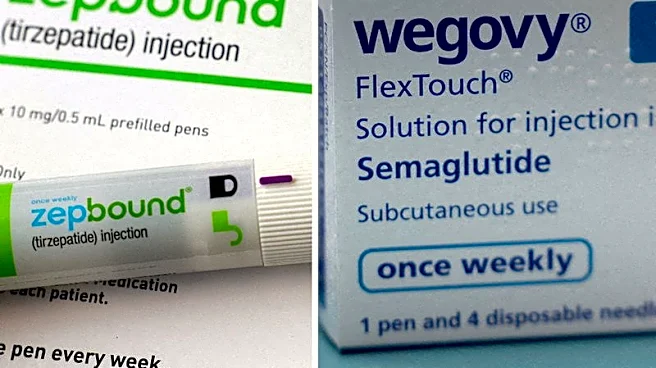
Researchers at the University of Mississippi are examining the financial and practical barriers that limit access to GLP-1 medications, such as Ozempic, Wegovy, and Zepbound, despite their proven health benefits and cost-effectiveness. A study by the Institute
for Clinical and Economic Review found these drugs offer significant value, yet insurance plans often restrict access due to the potential budget impact. The large eligible patient population, particularly those with obesity, could lead to billions in new spending for insurers. While these medications are cost-effective, they are not necessarily cost-saving, and long-term savings from reduced health issues remain unproven. Many patients discontinue use due to costs and side effects, often regaining lost weight. The study suggests that effective treatment requires more than medication, emphasizing the need for lifestyle support. Concerns also arise over compounded GLP-1 drugs, which lack FDA approval and pose safety risks.
Why It's Important?
The study underscores the tension between the cost-effectiveness of GLP-1 drugs and the financial burden they impose on insurance systems. This issue is critical as it affects millions of Americans with obesity, a condition linked to numerous health problems. The potential for these drugs to reduce long-term healthcare costs is significant, yet unproven, highlighting a gap in healthcare policy and insurance coverage. The findings suggest a need for comprehensive treatment plans that include lifestyle changes, which could enhance the effectiveness of GLP-1 drugs. Additionally, the safety concerns surrounding compounded drugs emphasize the importance of regulatory oversight to protect patients. The research could influence future healthcare policies and insurance practices, potentially leading to broader access to these medications.
What's Next?
Future steps may involve policy changes to expand insurance coverage for GLP-1 drugs, possibly incorporating lifestyle support as part of treatment plans. Insurers might need to reassess their coverage strategies to balance cost-effectiveness with financial sustainability. The study could prompt further research into the long-term economic benefits of GLP-1 drugs, potentially influencing healthcare policy. Additionally, regulatory bodies like the FDA may increase scrutiny of compounded drugs to ensure patient safety. Stakeholders, including healthcare providers, insurers, and policymakers, will likely engage in discussions to address these challenges and improve access to effective obesity treatments.