







What's Happening?
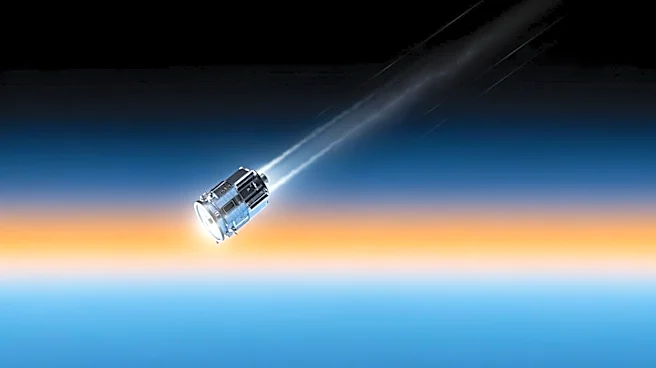
NASA has announced that the Van Allen Probe A, a 1,300-pound satellite, is expected to re-enter Earth's atmosphere on March 10, 2026, at approximately 7:45 p.m. EDT. The spacecraft, which was part of a mission to study the Van Allen radiation belts from
2012 to 2019, ran out of fuel and is now set to burn up mostly upon reentry. Some components may survive, but NASA assures that the risk of harm to humans is low, with a probability of 1 in 4,200. The satellite's reentry is earlier than initially predicted due to increased atmospheric drag caused by heightened solar activity during the current solar cycle.
Why It's Important?
The reentry of the Van Allen Probe A highlights the challenges of managing space debris and the importance of understanding space weather. The data collected by the probe has been crucial in understanding the Earth's radiation belts, which protect the planet from harmful cosmic radiation and solar storms. This knowledge is vital for safeguarding satellites, astronauts, and technological systems on Earth. The event also underscores the need for continued monitoring and prediction of space weather to mitigate risks associated with space missions.
What's Next?
NASA and the U.S. Space Force will continue to monitor the reentry of the Van Allen Probe A to ensure public safety. The event may prompt discussions on improving strategies for deorbiting defunct satellites and managing space debris. Additionally, the scientific community will likely continue to analyze the data collected by the Van Allen Probes to enhance space weather forecasting and protection measures for future missions.