






What's Happening?
Nevada rancher David Park has permanently protected 1,228 acres of Desert Creek Ranch through a conservation easement, ensuring the land remains available for agriculture and serves as critical habitat for the rare Bi-State sage-grouse. This initiative,
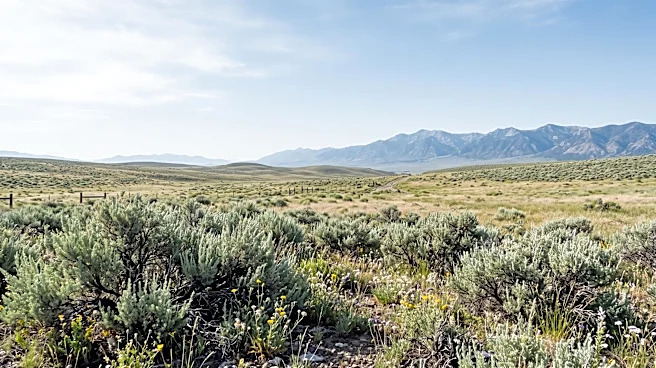
which began in 2016, prevents non-agricultural development and prohibits the division of the property into smaller plots. Park will continue to operate the ranch for livestock grazing, with future owners bound by the same restrictions. The Eastern Sierra Land Trust confirmed that the agreement aims to balance agricultural production with wildlife habitat protection. Additionally, a separate grant awarded in 2026 will fund restoration work across 350 acres of the ranch, specifically targeting invasive grass species that threaten native plants and increase wildfire risks. The Bi-State sage-grouse, a sensitive species found only along the Nevada-California border, relies on large, connected areas of native sagebrush, perennial grasses, and wildflowers for food, shelter, and nesting. The ranch includes vital wet meadows and spring-fed areas crucial for the birds' development.
Why It's Important?
This conservation effort is significant for both agricultural sustainability and biodiversity in the U.S. West. By permanently protecting Desert Creek Ranch, it ensures the continuation of traditional ranching practices while safeguarding the habitat of the Bi-State sage-grouse, a species whose population is declining. The prevention of non-agricultural development helps combat urban sprawl and preserves open spaces vital for ecological balance. The grant for invasive grass treatment addresses a critical environmental threat, as species like cheatgrass displace native vegetation and fuel wildfires, which can devastate sage-grouse habitats. This initiative demonstrates a model where agricultural operations can coexist with and contribute to conservation goals, potentially influencing similar land management strategies across other Western states facing similar challenges. It highlights the economic and ecological value of integrated land-use planning and the role of private landowners in national conservation efforts.
What's Next?
The immediate next step involves the implementation of the 2026 grant for restoration work on 350 acres of Desert Creek Ranch, focusing on treating invasive grass. This project will likely involve specific methods such as herbicide application, managed grazing, and replanting native species to restore ecological balance. Monitoring the effectiveness of these restoration efforts will be crucial for future land management decisions. The conservation easement ensures that the land's protected status will continue regardless of future ownership changes, providing long-term stability for both agricultural use and sage-grouse habitat. This successful model could serve as a blueprint for other ranchers and conservation organizations looking to protect critical habitats while maintaining working landscapes. Continued collaboration between landowners, conservation groups, and government agencies will be essential to expand such initiatives and ensure the long-term survival of sensitive species like the Bi-State sage-grouse.
Beyond the Headlines
Beyond the immediate benefits of habitat preservation and agricultural continuity, this initiative touches upon the evolving relationship between private land ownership and public environmental good. It challenges the traditional dichotomy between economic development and conservation, demonstrating that sustainable land use can integrate both. The focus on invasive species management also highlights the complex ecological challenges facing Western landscapes, where human-introduced species can dramatically alter ecosystems and increase natural disaster risks. This project could inspire broader policy discussions on incentives for private land conservation, the role of federal and state grants in supporting such efforts, and the importance of localized, community-driven conservation strategies. It also underscores the cultural significance of ranching in the American West and how these traditions can be adapted to meet contemporary environmental imperatives, fostering a more holistic approach to land stewardship.