
What's Happening?
President Trump has issued the American Declaration of Freedom in Space, outlining the U.S.'s commitment to lead space exploration, development, use, and settlement across the solar system. Concurrently,
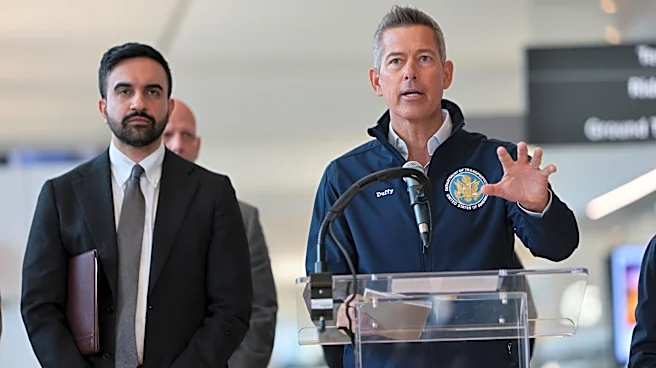
the Federal Aviation Administration (FAA) has announced four new regulations aimed at streamlining commercial space launch and reentry processes. These regulatory changes are designed to reduce burdens on the industry and enhance operational flexibility, all while maintaining stringent safety standards. Transportation Secretary Sean Duffy emphasized that these initiatives are intended to 'supercharge America’s booming commercial space industry,' fostering innovation and safety. The FAA is also planning a more comprehensive overhaul of its licensing framework in 2027, anticipating a significant increase in commercial space launches, potentially reaching 1,000 per year by 2030. These combined efforts signal a concerted push from the U.S. government to solidify its leadership in the rapidly evolving commercial space sector.
Why It's Important?
This dual announcement from President Trump and the FAA is significant for the U.S. commercial space industry, signaling a strong governmental commitment to its growth and dominance. The Declaration of Freedom in Space provides a clear policy directive, potentially encouraging private investment and technological innovation by outlining a long-term vision for American leadership in space. The FAA's new regulations are crucial for reducing bureaucratic hurdles that have historically slowed down commercial space operations. By streamlining launch and reentry procedures, the U.S. aims to make its regulatory environment more attractive for space companies, potentially drawing more business and talent to the country. This could lead to increased job creation, advancements in aerospace technology, and a more competitive U.S. position in the global space economy. The anticipated increase to 1,000 launches per year by 2030 highlights the ambitious scale of growth expected, which will require robust infrastructure and a skilled workforce.
What's Next?
The immediate next steps involve the implementation of the four new FAA regulations, which are designed to take effect promptly to facilitate commercial space operations. Looking ahead, the FAA plans a more extensive overhaul of its licensing framework in 2027. This larger regulatory reform will be critical in accommodating the projected surge in commercial space launches, with an ambitious target of 1,000 launches annually by 2030. Industry stakeholders will closely monitor these regulatory developments to understand their full impact on operational costs, timelines, and safety protocols. Companies in the commercial space sector, including launch providers and satellite operators, will likely adjust their business strategies to leverage the new, more flexible regulatory environment. Furthermore, the broader implications of President Trump's Declaration of Freedom in Space will likely shape future policy decisions and international collaborations in space exploration and commercialization.
Beyond the Headlines
Beyond the immediate regulatory and policy implications, President Trump's Declaration of Freedom in Space and the FAA's new regulations signal a deeper philosophical shift towards greater commercial involvement in space. This move could redefine the roles of government agencies like NASA, potentially shifting them from primary operators to facilitators and regulators, while private entities take on more operational responsibilities. This could foster a more dynamic and competitive space industry, driving down costs and accelerating innovation. However, it also raises questions about the long-term governance of space, including issues of resource allocation, orbital debris management, and international cooperation in a more commercially driven environment. The emphasis on 'freedom' in space could also set precedents for how property rights and sovereignty are defined beyond Earth, potentially leading to new legal frameworks and international agreements as commercial activities expand into lunar and interplanetary domains.