





What's Happening?
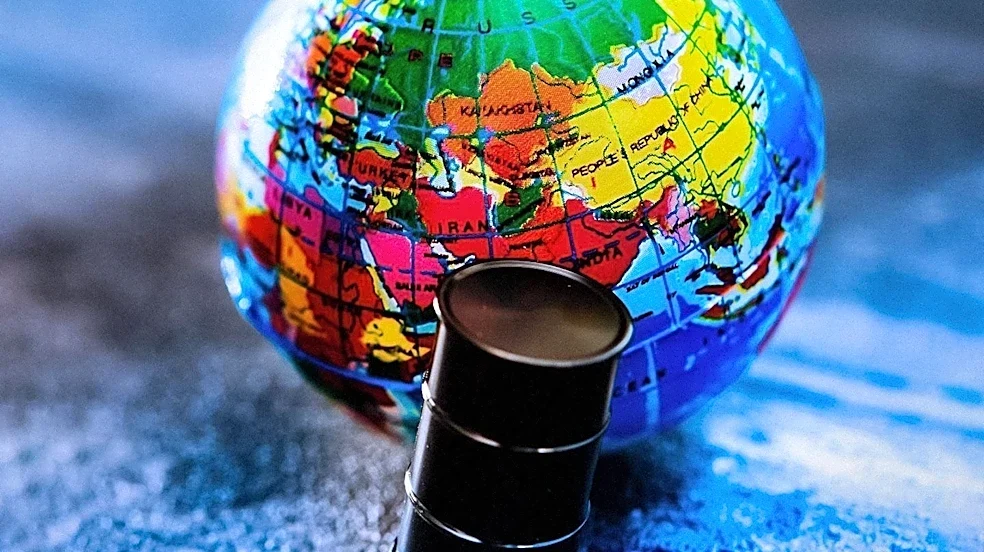
The Middle East is geographically classified as a subregion of Asia, not a continent, according to standard geographic references, including the United Nations geoscheme. This region encompasses countries in Western Asia, such as Iran, Iraq, and Saudi
Arabia, along with the Levant. Additionally, parts of Northern Africa, including Egypt and sometimes Sudan, are included due to shared historical, religious, and strategic ties. Turkey is also considered part of the Middle East, despite a small portion of its territory being in Southeastern Europe, making it a transcontinental country. The term 'Middle East' itself emerged in the 19th century as a Eurocentric label used by British colonial administrators, reflecting historical power dynamics rather than strict geographical reality. Unlike continents, which are defined by large, continuous landmasses separated by significant bodies of water, the Middle East is a conceptual construct with fluid and contested boundaries, often shifting based on political alliances, religious demographics, and strategic interests.
Why It's Important?
The distinction between the Middle East as a region versus a continent carries significant implications for understanding global geography, international relations, and cultural perceptions. Misclassifying the Middle East as a continent can lead to an oversimplified view of its diverse cultures, languages, and political systems, potentially reinforcing stereotypes and hindering nuanced understanding. In diplomacy and international policy, this categorization influences how foreign investment, military strategies, and economic partnerships are shaped. Recognizing it as a region encourages a more precise and respectful approach to engagement, acknowledging internal differences rather than generalizing about its people and politics. For educational purposes, accurate geographical classification prevents confusion and promotes a more informed global perspective, ensuring that students learn about the region's complex realities rather than a monolithic entity. The historical context of the term's origin also highlights how geopolitical power dynamics can shape geographical nomenclature, influencing how regions are perceived and interacted with on a global scale.
What's Next?
Moving forward, a continued emphasis on accurate geographical education and terminology will be crucial to foster a more nuanced understanding of the Middle East. Educational institutions and media outlets are expected to reinforce the classification of the Middle East as a subregion of Asia, rather than a continent, to avoid perpetuating historical inaccuracies and oversimplifications. In international discourse, this clarification can lead to more informed policy-making and diplomatic strategies, encouraging a focus on the specificities of individual nations and sub-regions within the Middle East, rather than broad generalizations. This shift in understanding could also influence how aid and development programs are structured, ensuring they are tailored to the diverse needs and contexts of the various countries within the region. The ongoing evolution of geopolitical landscapes may further refine the conceptual boundaries of the Middle East, but its fundamental classification as a subregion is likely to remain consistent with established geographic standards.
Beyond the Headlines
The debate over whether the Middle East is a continent or a region delves into deeper implications concerning identity, power, and the construction of knowledge. The Eurocentric origin of the term 'Middle East' underscores how historical colonial perspectives have shaped global geographical understanding, often prioritizing external strategic interests over indigenous realities. This historical framing can inadvertently perpetuate a sense of 'otherness' and contribute to a lack of appreciation for the region's internal diversity. Ethically, recognizing the Middle East as a complex, multi-faceted region within Asia challenges monolithic narratives and promotes a more inclusive global worldview. It encourages a critical examination of how geographical labels are created and maintained, revealing their potential to influence political discourse, cultural representation, and even conflict resolution. Understanding these underlying dynamics is essential for fostering genuine cross-cultural understanding and moving beyond historically imposed categorizations.