







What's Happening?
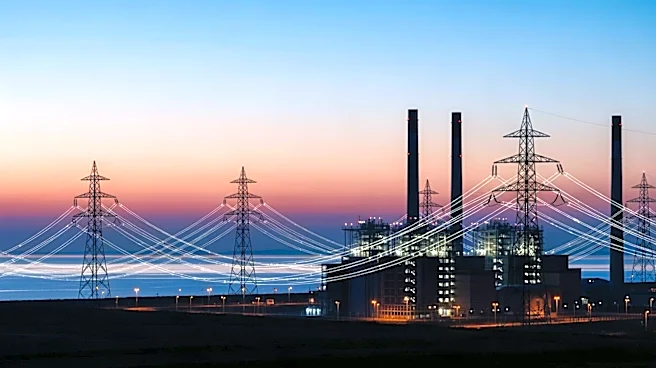
Japan's Prime Minister Sanae Takaichi has announced a commitment to deepen energy cooperation with Vietnam during a visit to Hanoi. This development comes as part of the $10 billion Power Asia Initiative, aimed at supporting energy self-reliance in Asian
countries. Takaichi and her Vietnamese counterpart, Le Minh Hung, signed six agreements covering various sectors, including technology, agriculture, and space. The two leaders emphasized economic security as a new priority, particularly focusing on critical minerals and stable supply chains. This cooperation is set against the backdrop of rising oil prices due to Middle Eastern conflicts and concerns over China's territorial claims in the East and South China Seas. Japan, a significant investor in Vietnam, has seen a decline in new investments but an increase in bilateral trade.
Why It's Important?
The enhanced cooperation between Japan and Vietnam is significant in the context of regional security and economic stability. As both countries face challenges from China's territorial ambitions, strengthening ties can serve as a strategic counterbalance. The focus on energy cooperation is crucial, given the disruptions in oil supply chains caused by Middle Eastern conflicts. This partnership could help Vietnam secure necessary resources, thereby stabilizing its energy sector. For Japan, this move reinforces its influence in Southeast Asia and aligns with its broader strategy of diversifying economic partnerships to mitigate risks from U.S.-China trade tensions. The agreements also highlight the importance of critical minerals, which are vital for technological and industrial applications, further underscoring the strategic nature of this cooperation.
What's Next?
Following the agreements, Japan and Vietnam are expected to implement the outlined initiatives, particularly in energy and critical minerals. The success of these initiatives could lead to further economic integration and collaboration in other sectors. Both countries may also continue to engage in diplomatic efforts to address regional security concerns, particularly in the South China Sea. The outcomes of these efforts could influence regional dynamics and potentially attract other countries to join similar cooperative frameworks. Additionally, Japan's involvement in Vietnam's energy sector might encourage other nations to seek similar partnerships, potentially reshaping energy alliances in Asia.