

What's Happening?
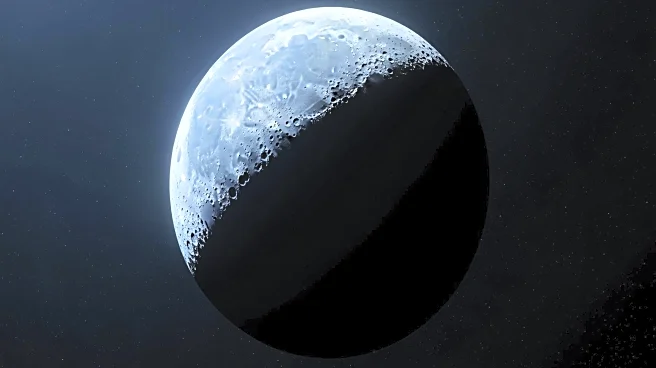
Astronomy enthusiasts have a unique opportunity to observe the open cluster NGC 7789, also known as Caroline's Rose, in the constellation Cassiopeia. This celestial event is particularly favorable due to the new moon, which occurs at 2:52 P.M. EST, leaving
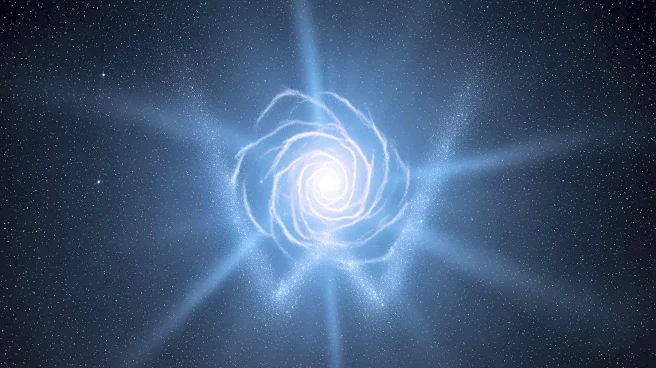
the skies dark and ideal for deep-sky observation. Caroline's Rose, discovered by Caroline Herschel in 1783, is a cluster of stars that appears to form loops resembling the petals of a rose. Located near the star Caph in Cassiopeia, the cluster shines at a magnitude of 6.7 and spans about 16 arcminutes in the sky. Despite being over a billion years old, it is considered a young cluster in the Milky Way Galaxy.
Why It's Important?
The observation of Caroline's Rose offers both amateur and professional astronomers a chance to engage with a significant astronomical feature. Such events not only foster public interest in astronomy but also provide educational opportunities for those interested in the sciences. Observing celestial phenomena like NGC 7789 can inspire future generations of astronomers and scientists, contributing to a broader understanding of our galaxy. Additionally, events like these can boost local economies by attracting tourists and astronomy enthusiasts to observatories and planetariums.
What's Next?
As the new moon provides optimal conditions for stargazing, astronomers and enthusiasts are likely to continue observing other celestial events and features in the coming days. The interest generated by Caroline's Rose may lead to increased participation in astronomy clubs and events, as well as a heightened interest in upcoming astronomical phenomena. Observatories may also see a rise in visitors eager to learn more about the night sky.