










What's Happening?
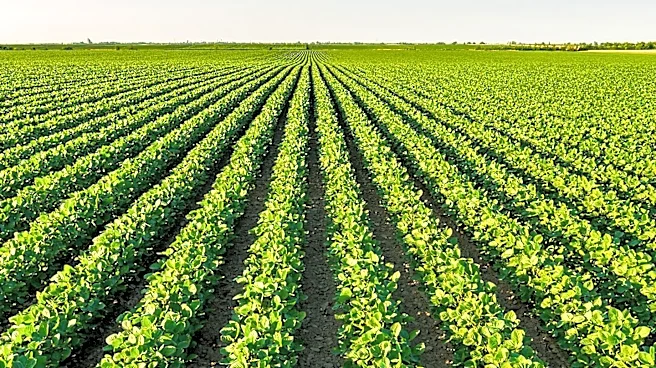
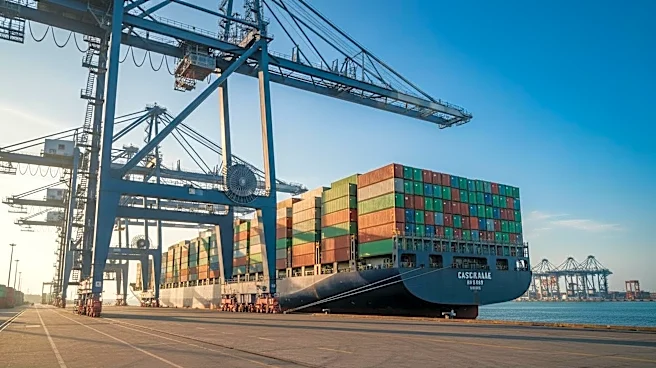
China and the United States have reached an agreement to expand their agricultural trade, setting guiding objectives for this purpose. The agreement includes a reciprocal tariff reduction framework for relevant agricultural products, as announced by the Ministry
of Commerce. This development follows recent economic and trade consultations between the two nations. Ministry Spokesman He Yadong emphasized the importance of agricultural trade as a key component of China-U.S. economic relations. He stated that companies will make trading decisions based on market principles, actual demand, and market conditions. China has expressed its willingness to collaborate with the U.S. to create favorable conditions for expanding two-way agricultural trade.
Why It's Important?
The agreement between China and the U.S. on agricultural trade is significant as it represents a step towards improving economic relations between the two largest economies in the world. By reducing tariffs on agricultural products, both countries aim to enhance trade flows, benefiting farmers and agricultural businesses. This move could lead to increased market access and competitiveness for U.S. agricultural products in China, potentially boosting the U.S. agricultural sector. Additionally, it may help alleviate some of the trade tensions that have affected bilateral relations in recent years. The agreement underscores the importance of cooperation in addressing global economic challenges and could serve as a model for future trade negotiations.
What's Next?
Following the agreement, both countries are expected to work on implementing the reciprocal tariff reduction framework. This will involve detailed negotiations to determine which agricultural products will be included and the specific tariff reductions. Stakeholders in the agricultural sector, including farmers and trade associations, will likely monitor these developments closely. The success of this agreement could pave the way for further economic cooperation between China and the U.S., potentially leading to agreements in other sectors. Political leaders and trade officials from both countries may continue to engage in dialogue to ensure the smooth execution of the agreement and to explore additional areas for collaboration.