




What's Happening?
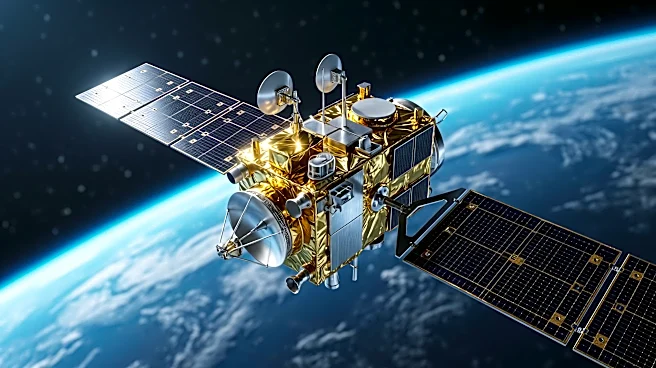
Experts warn that a single nuclear explosion in space could disable 98% of Earth's satellites within a week, leading to catastrophic disruptions in global technology. Zachary Petersen and his colleagues at the University of Wisconsin–Madison modeled the effects
of a 1-megaton explosion 500 kilometers above the South Atlantic. Their findings indicate that while the initial X-ray spike is damaging, the more disruptive element would be electrons released by radioactive fission becoming trapped in Earth's magnetic field, creating an artificial radiation belt that would repeatedly expose satellites. Even with satellites three times more resilient to radiation, 97% would still fail within two weeks. This scenario would severely impact global navigation systems like GPS, internet connections, and weather forecasts, which rely heavily on satellite technology.
Why It's Important?
The potential loss of nearly all satellites would have devastating and long-lasting repercussions for modern society, which is increasingly dependent on space technology. Critical services such as communication, navigation, financial transactions, and weather forecasting would be severely disrupted, leading to widespread chaos and economic instability. The recovery process would be prolonged, potentially taking years, as new satellites would need to be launched into an environment still affected by elevated radiation levels and increased debris. This situation could also trigger Kessler syndrome, a theoretical scenario where debris from collisions creates a chain reaction, making orbit lethal for future launches for decades. The U.S. has previously detonated a 1.4-megaton nuclear bomb at 400 km in 1962, disrupting satellites, but the current orbital environment is far more crowded with approximately 25,000 objects.
What's Next?
The Outer Space Treaty currently bans the launch of nuclear weapons into space, and most major spacefaring nations are signatories. However, tensions persist, as evidenced by Russia's veto of a UN vote in 2024 to reaffirm this commitment, following U.S. warnings about Russia's potential plans for a space weapon with nuclear capabilities. The vulnerability of modern society to such an event suggests a need for increased international cooperation to prevent the weaponization of space and to strengthen the non-proliferation regime. Experts like Craig Underwood from the University of Surrey emphasize that societies are now far more vulnerable than during the Cold War, when more attention was paid to protecting critical space systems. Rebuilding orbital infrastructure would be a monumental task, complicated by ongoing radiation and debris hazards.
Beyond the Headlines
Beyond the immediate technological and economic fallout, a nuclear detonation in space raises profound ethical and geopolitical questions. The potential for a single act to cripple global infrastructure highlights the interconnectedness of modern systems and the fragility of technological reliance. It underscores the urgent need for robust international agreements and verification mechanisms to prevent the weaponization of space. The scenario also forces a re-evaluation of national security strategies, moving beyond traditional terrestrial threats to encompass the orbital domain. The long-term consequences, including the potential for a 'Kessler syndrome' that could render space unusable for generations, present an existential challenge to humanity's future in space and its continued technological advancement. This event would not just be a technological setback but a fundamental shift in how nations perceive and protect their critical assets.