





What's Happening?
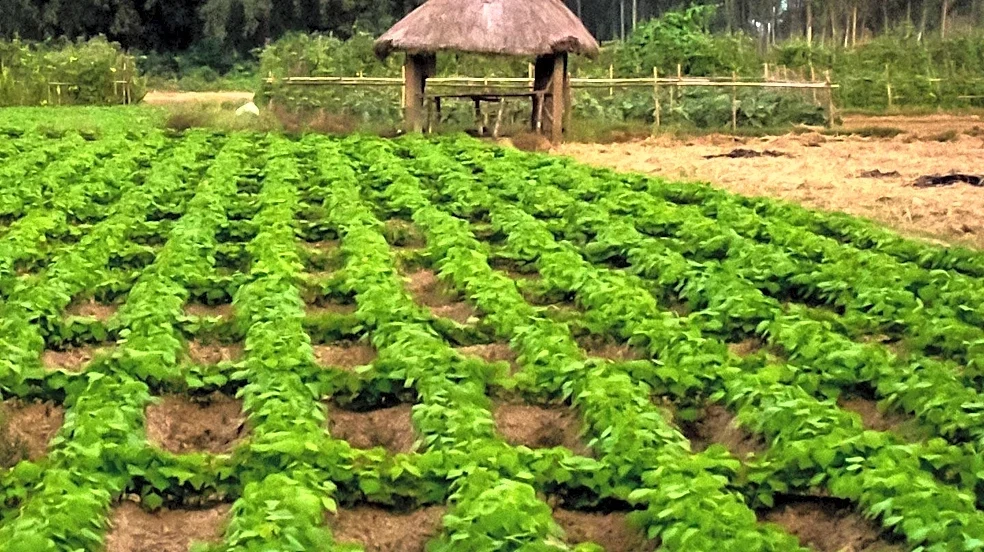
Ayele Tibebu, a farmer in the highlands of Misha district in Central Ethiopia, has successfully transformed a small plot of land into a profitable forage seed business. Facing challenges with quality animal feed and rising livestock costs, Tibebu began
by planting oats on 0.25 hectares in 2024, yielding 600 kilos of high-quality oat seed. He sold his entire harvest for ETB 45,000 (USD 288). Encouraged by this success, he expanded to 0.375 hectares in 2025, producing 900 kilos of oat seed, with prices rising to ETB 120,000 (USD 770) per ton. This initiative is part of a broader effort led by the International Livestock Research Institute (ILRI) through the TAAT II project, which provides farmers with early generation seeds and training in seed production, certification, and marketing.
Why It's Important?
This success story is vital for Ethiopia's livestock sector, which frequently faces feed shortages due to erratic rainfall, shrinking farmlands, and longer dry periods. By commercializing forage seed production, farmers like Tibebu are not only securing their own livelihoods but also contributing to a more reliable supply of quality feed for livestock across the region. This, in turn, improves milk and meat production, enhances food security, and drives local economic growth. The project's emphasis on quality assurance and market access ensures that farmers receive fair prices for their produce, encouraging further investment in forage seed agribusiness. The initiative also promotes sustainable farming practices, such as using perennial grasses to reduce soil erosion and improve animal nutrition year-round.
What's Next?
For the 2027 season, Ayele Tibebu plans to expand his oat seed plot to 0.5 hectares, serving as a model for other farmers. Researchers and governments are encouraged to build on this pilot program to scale up forage biomass commercialization, addressing the growing gap in quality forage availability and market linkages. Strengthening connections between early generation seed production centers and organized seed producer associations will be crucial. The initiative also has climate benefits, as well-fed animals produce more with lower greenhouse gas emissions per unit of milk or meat. The focus will be on expanding this approach with support from zonal and regional governments to ensure a steady supply of quality feed and foster economic opportunities throughout the value chain.
Beyond the Headlines
This development highlights the transformative potential of targeted agricultural interventions in developing economies. By empowering smallholder farmers with knowledge, quality inputs, and market access, such programs can create sustainable business models that address both economic hardship and environmental challenges. The shift from subsistence farming to agribusiness, even on a small scale, can have ripple effects, improving household incomes, nutrition, and overall community resilience. Furthermore, the integration of climate-smart agricultural practices, such as using perennial grasses for soil health and reducing emissions from livestock, demonstrates a holistic approach to development that considers both productivity and ecological sustainability. This model could be replicated in other regions facing similar agricultural and climate-related challenges.