









What's Happening?
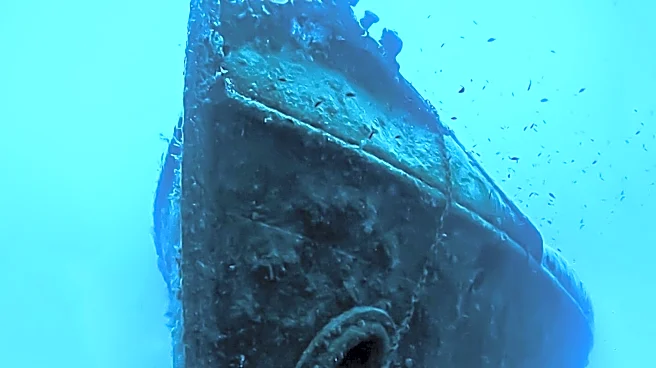
A severe drought in Serbia has caused the Danube River to reach some of its lowest levels on record, revealing dozens of Nazi-era warships that were deliberately sunk in 1944. These ships, scuttled to prevent capture by the Red Army, have resurfaced near
Prahovo, posing navigation hazards and potential environmental risks due to possible live ammunition. The European Union is supporting Serbia in raising the wrecks and clearing the waterway, a project expected to continue until 2028. The drought has also disrupted grain shipments and necessitated repeated dredging operations to maintain navigability on this crucial trade corridor.
Why It's Important?
The resurfacing of these warships highlights the ongoing impact of climate change and extreme weather events on infrastructure and historical sites. The drought-induced low water levels in the Danube disrupt vital trade routes, affecting regional economies dependent on river transport. The situation underscores the need for comprehensive climate adaptation strategies to mitigate the effects of such environmental challenges. Additionally, the presence of potentially hazardous materials in the sunken ships raises concerns about environmental safety and the importance of international cooperation in addressing these issues.