









What's Happening?
Meteorologists have confirmed the onset of the El Niño weather phenomenon, which is expected to significantly impact global crop production. El Niño is characterized by unusually warm waters in the Pacific Ocean, affecting global rainfall patterns and
temperatures. This development comes at a time when farmers worldwide are already grappling with trade wars, fertilizer shortages, and high energy prices. The U.N. Food and Agriculture Organization (FAO) and World Food Programme (WFP) have issued a joint appeal for over $200 million to assist 8.8 million people in high-risk countries. Regions such as southern Africa, Central America, India, and Australia are particularly vulnerable, with potential impacts on maize and rice production. The last significant El Niño event in 2015-16 affected over 60 million people and led to $5 billion in humanitarian appeals.
Why It's Important?
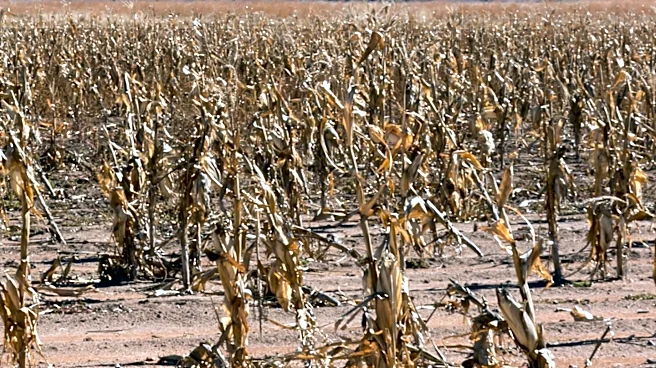
The El Niño phenomenon poses a substantial threat to global food security, particularly in regions already facing high levels of food insecurity. The potential for reduced crop yields could exacerbate existing economic challenges, driving up food prices and increasing the need for humanitarian aid. While some regions, like the United States, may experience positive impacts on crop yields, vulnerable areas could face severe food shortages. The situation is further complicated by geopolitical tensions and reduced global humanitarian aid funding. The ability of countries to trade and distribute food effectively will be crucial in mitigating the impacts of El Niño-induced production deficits.
What's Next?
Aid agencies and governments are preparing for the potential impacts of El Niño, with a focus on supporting vulnerable regions. The FAO and WFP are seeking additional funding to address food insecurity risks. Monitoring and forecasting efforts will be essential in anticipating and responding to crop failures. International trade will play a critical role in ensuring food reaches areas in need. The situation requires coordinated global efforts to prevent a humanitarian crisis, particularly in regions with limited resources to cope with the effects of El Niño.
Beyond the Headlines
The El Niño phenomenon highlights the interconnectedness of climate events and global food security. It underscores the need for resilient agricultural practices and international cooperation in addressing climate-related challenges. The event also raises ethical considerations regarding the distribution of resources and the responsibility of wealthier nations to support vulnerable populations. Long-term strategies to enhance food security and adapt to climate variability will be essential in mitigating future risks.