


What's Happening?
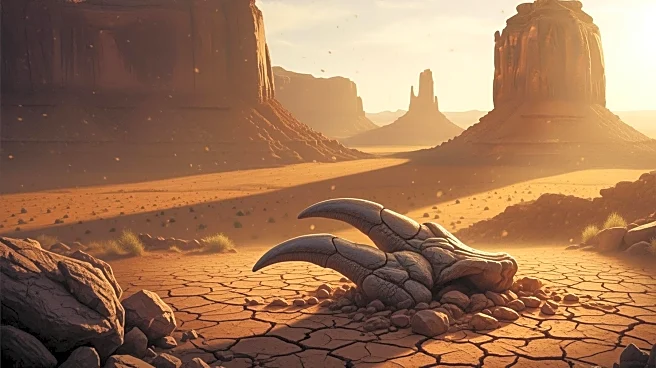
Paleontologists have discovered a new species of Spinosaurus, named Spinosaurus mirabilis, in the Sahara Desert, Niger. This meat-eating dinosaur, which lived 95 to 100 million years ago, was found in a remote area called Jenguebi. The discovery was made
possible by a French geologist's monograph from 70 years ago, which described a fossilized tooth. The research team, led by Professor Paul Sereno from the University of Chicago, found jaw fragments in 2019 and additional crests in 2022. The dinosaur is believed to have been a shallow water predator, preying on large fish.
Why It's Important?
The discovery of Spinosaurus mirabilis provides valuable insights into the diversity and evolution of dinosaurs, particularly those adapted to aquatic environments. It highlights the importance of revisiting historical sites with modern technology and methodologies, which can lead to significant scientific breakthroughs. This find also underscores the potential for further discoveries in underexplored regions like the Sahara, contributing to our understanding of prehistoric life and the ecological dynamics of ancient ecosystems.
What's Next?
The fossil remains of Spinosaurus mirabilis will be displayed at the Museum of the River in Niamey, Niger, with a replica at the Chicago Children's Museum. This will help engage the public and inspire future generations of scientists. Researchers may continue to explore the Sahara for additional fossils, potentially uncovering more about the region's prehistoric past. The study of Spinosaurus mirabilis could lead to further research on the adaptations and behaviors of similar species, enhancing our knowledge of dinosaur ecology.