






What's Happening?
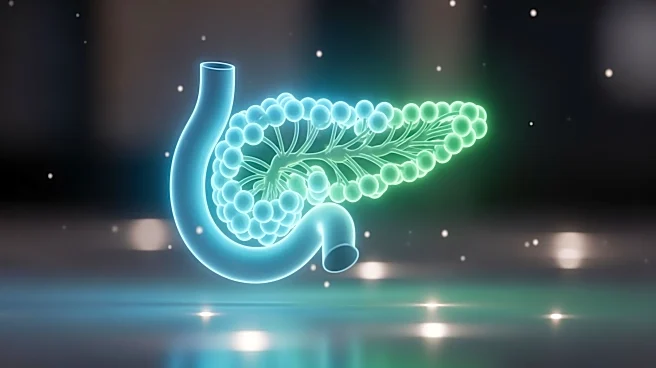
A clinical trial for a personalized mRNA vaccine against pancreatic cancer has shown promising results, with seven out of eight responders still alive six years after treatment. The trial, conducted by Memorial Sloan Kettering Cancer Center, involved
16 patients, half of whom developed a strong immune response to the vaccine. The vaccine is designed to target cancer cells remaining after surgery, preventing recurrence. The trial's success offers hope for a cancer type that is notoriously difficult to treat, with a low survival rate. The findings were presented at the American Association for Cancer Research meeting, highlighting the potential of mRNA technology in cancer treatment.
Why It's Important?
The success of the mRNA vaccine trial represents a significant advancement in cancer treatment, particularly for pancreatic cancer, which has limited effective therapies. The personalized approach of the vaccine, tailored to each patient's tumor, could revolutionize cancer treatment by improving survival rates and reducing recurrence. This development also underscores the broader potential of mRNA technology, which gained prominence during the COVID-19 pandemic, in addressing other complex diseases. The trial's results could pave the way for larger studies and eventually lead to new standard treatments for pancreatic cancer, offering hope to patients with this aggressive disease.
What's Next?
Following the promising results of the phase 1 trial, a larger phase 2 trial involving approximately 260 patients is underway to further evaluate the vaccine's effectiveness. Researchers are also exploring the development of a universal vaccine targeting common mutations in pancreatic cancer. Continued research and testing are essential to confirm the vaccine's efficacy and determine its potential as a standard treatment. The success of these trials could lead to broader applications of mRNA technology in oncology, potentially transforming cancer care and improving outcomes for patients worldwide.