
What's Happening?
Four astronauts aboard the SpaceX Crew-11 mission safely returned to Earth after their mission at the International Space Station (ISS) was cut short by a month due to a medical issue affecting one crew
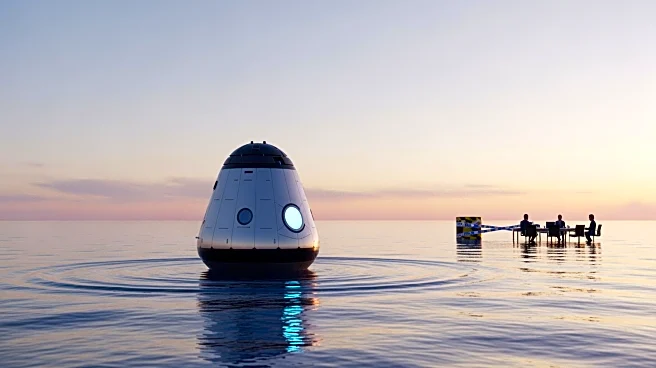
member. The capsule, carrying NASA astronauts Zena Cardman and Mike Fincke, Japan's Kimiya Yui, and Russian cosmonaut Oleg Platonov, splashed down in the Pacific Ocean near San Diego at 3:41 a.m. ET on January 15, 2026. This marked the first instance in the ISS's 25-year history where a mission was shortened due to a medical concern. The crew had initially launched on August 1, 2025, for a six-month mission. NASA emphasized that the medical issue was not an emergency, and the affected astronaut is in good spirits and undergoing routine medical checks.
Why It's Important?
The early return of the Crew-11 mission underscores the importance of health and safety protocols in space missions. This incident highlights NASA's preparedness and ability to respond to unforeseen medical issues, ensuring the well-being of astronauts. The decision to return early reflects NASA's commitment to utilizing Earth-based resources for optimal medical care. This event may influence future mission planning and protocols, emphasizing the need for robust health monitoring systems in space. The safe return of the crew also demonstrates the reliability of SpaceX's transportation systems, reinforcing confidence in commercial spaceflight capabilities.
What's Next?
Following the Crew-11 mission's early conclusion, NASA is preparing for the launch of Crew-12, expected to head to the ISS in mid-February. The affected astronaut will receive further medical evaluation in San Diego, a step not typically required post-splashdown, indicating the seriousness of the medical concern. NASA will likely review and possibly enhance its medical protocols and emergency preparedness for future missions. The incident may prompt discussions on improving in-flight medical support and the potential development of more advanced medical facilities aboard the ISS.