
What's Happening?
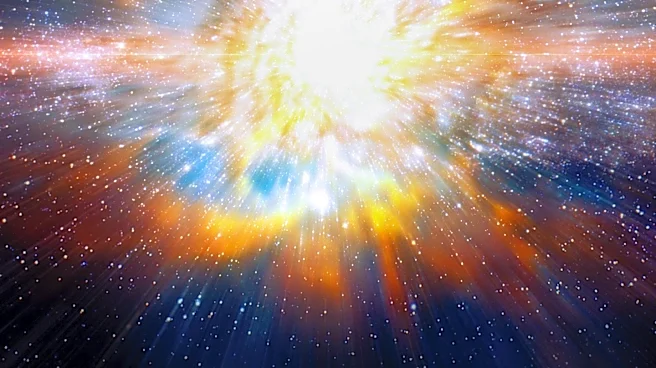
A global network of telescopes has captured the first moments of a supernova explosion in unprecedented detail. The event, located 500 million light-years away, was first detected by China's Einstein Probe space telescope as a flash of X-rays. Ground-based
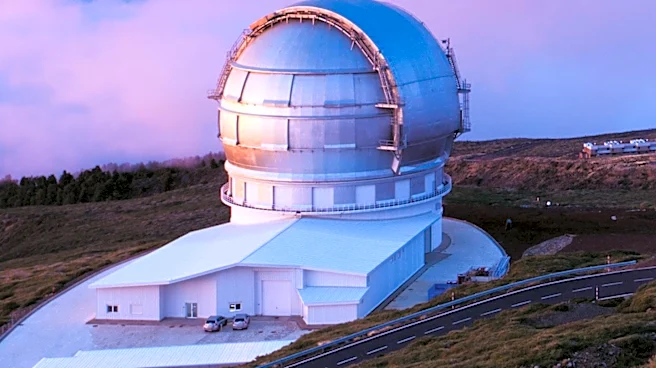
telescopes quickly identified it as a supernova, leading to a coordinated effort by observatories worldwide, including the Vera C. Rubin Observatory. The supernova, classified as a Type Ic broad-lined supernova, exhibited a faint shock breakout and no gamma-ray bursts, which is unusual for this type of explosion.
Why It's Important?
This observation provides valuable insights into the dynamics of supernova explosions and the behavior of massive dying stars. The detailed data collected by the telescopes will help astronomers understand the processes leading to supernovae and their impact on the surrounding environment. The findings also demonstrate the power of coordinated global efforts in astronomy, showcasing the potential for future discoveries through collaborative observations. This research could lead to a better understanding of the life cycles of stars and the formation of cosmic structures.
What's Next?
The Vera C. Rubin Observatory will continue to monitor the supernova, providing long-term data on its evolution. Further analysis of the collected data will aim to uncover more details about the star's structure and environment before the explosion. This research will contribute to the broader understanding of supernovae and their role in the universe. Future observations of similar events will help refine models of stellar evolution and the mechanisms driving supernova explosions.