







What's Happening?
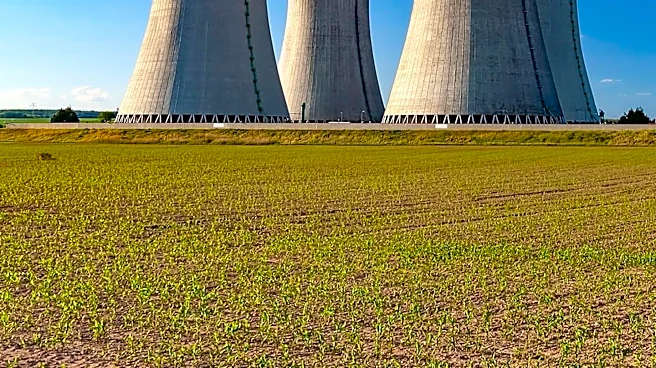
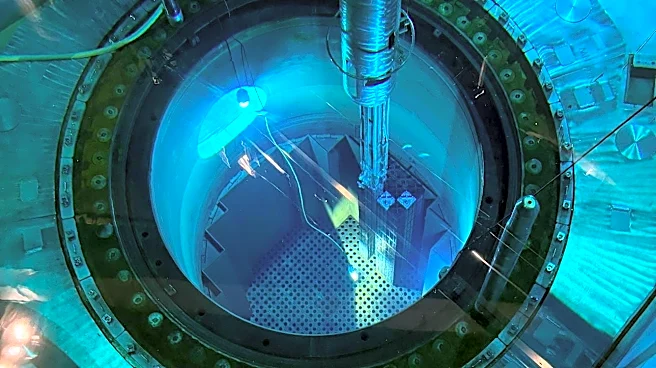
Modern physics confirms that the theoretical conversion of lead to gold is possible through nuclear transmutation. This process involves altering an atom's nucleus by bombarding elements like platinum or mercury with high-energy subatomic particles in particle accelerators
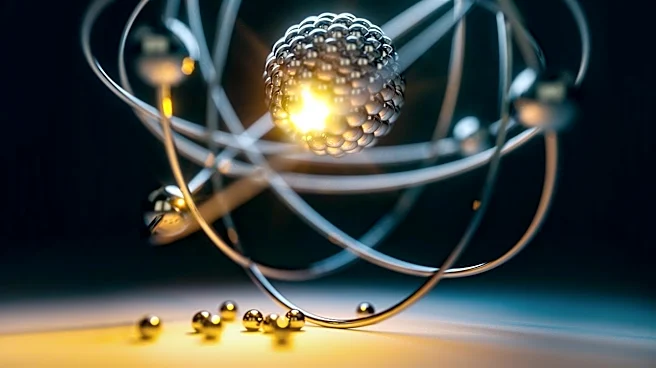
or nuclear reactors. While medieval alchemists attempted to achieve this through chemical reactions, which are fundamentally incapable of changing the number of protons in an atom's nucleus, modern science has found a nuclear pathway. Gold has 79 protons, mercury 80, and lead 82. Chemical reactions only involve the sharing or transfer of valence electrons, leaving the nucleus untouched. However, nuclear physics allows for the alteration of the atomic nucleus, making the alchemical dream of transmuting elements physically possible, albeit through nuclear means rather than chemical ones.
Why It's Important?
The scientific understanding of lead-to-gold conversion highlights the distinction between chemical and nuclear processes. While the concept of transmuting base metals into noble ones has fascinated humanity for centuries, modern physics demonstrates that such a feat, while theoretically achievable, is economically unfeasible. The cost and inefficiency of artificially producing gold through nuclear transmutation far exceed the market value of naturally mined gold. This underscores the immense energy and technological requirements for altering atomic structures, contrasting sharply with the relatively simpler processes of chemical reactions. The impracticality of this conversion reinforces the economic value of naturally occurring gold and the limitations of even advanced scientific methods when faced with extreme cost-benefit imbalances.
What's Next?
While the direct, cost-effective conversion of lead to gold remains out of reach, ongoing research in nuclear physics and materials science may continue to explore the fundamental principles of nuclear transmutation. Future advancements in particle accelerator technology or nuclear reactor efficiency could theoretically reduce the cost of such processes, but current projections suggest this is a distant prospect. The primary focus of nuclear research is likely to remain on energy production, medical isotopes, and fundamental particle physics, rather than the commercial production of precious metals. The economic realities of gold mining will continue to dictate its supply and market value, as artificial production offers no competitive advantage.
Beyond the Headlines
The scientific validation of nuclear transmutation as a means to convert elements, even if impractical for gold, has profound implications for our understanding of matter and energy. It bridges the gap between ancient alchemical aspirations and modern scientific capabilities, demonstrating that some long-held 'impossible' dreams are merely technologically or economically challenging. This concept also subtly influences public perception of scientific power, showcasing the ability to fundamentally alter elements, a feat once considered divine or magical. It also serves as a reminder that scientific possibility does not always equate to practical application, especially when economic factors are considered. The enduring allure of alchemy, even in its modern, nuclear form, speaks to a deep human desire for transformation and value creation.