



What's Happening?
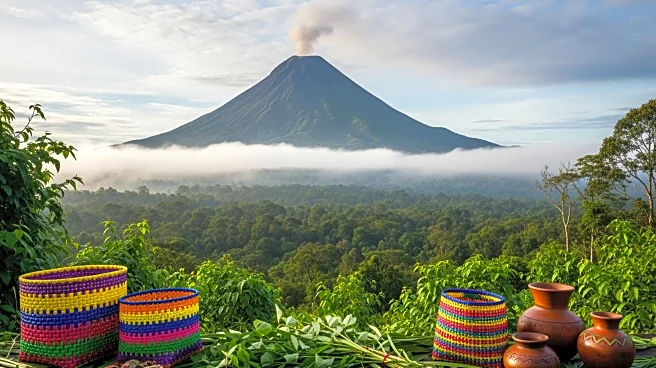
In southwestern Colombia, the Indigenous community near the Purace volcano is facing potential eruption risks. Despite increased seismic activity and ash emissions, residents like Oliverio Quira remain unafraid, continuing their daily routines. The Purace volcano,
a sacred site for the Coconuco Indigenous people, has a history of eruptions, with the last significant one occurring in 1977. Authorities have issued alerts and are preparing for possible evacuations of around 800 people living near the volcano. The community views the volcano as a protective spirit, performing rituals to honor it. However, concerns about infrastructure and logistics for a full evacuation remain, as local leaders call for resources to protect livestock and ensure community safety.
Why It's Important?
The situation highlights the resilience and cultural significance of the Purace volcano to the Indigenous community. It underscores the challenges faced by remote communities in balancing cultural heritage with safety concerns. The potential eruption poses risks not only to human life but also to livestock and agriculture, which are vital to the local economy. The response to this natural threat could set precedents for how similar communities manage cultural and environmental challenges. The need for adequate infrastructure and emergency preparedness is critical, as it affects the community's ability to respond effectively to natural disasters.
What's Next?
Authorities are working on setting up temporary shelters and ensuring resources like water and food are available. The community leaders are advocating for more comprehensive support to protect their livestock and maintain their way of life. The situation requires ongoing monitoring of the volcano's activity and readiness to implement evacuation plans if necessary. The response from government and aid organizations will be crucial in determining the community's resilience and ability to preserve their cultural practices amidst environmental threats.
Beyond the Headlines
The Purace volcano's activity raises broader questions about the intersection of cultural heritage and modern safety protocols. The Indigenous community's relationship with the volcano reflects a deep cultural connection that influences their response to natural threats. This situation may prompt discussions on how to integrate traditional knowledge with scientific approaches to disaster management. It also highlights the need for policies that respect cultural practices while ensuring community safety.