



What's Happening?
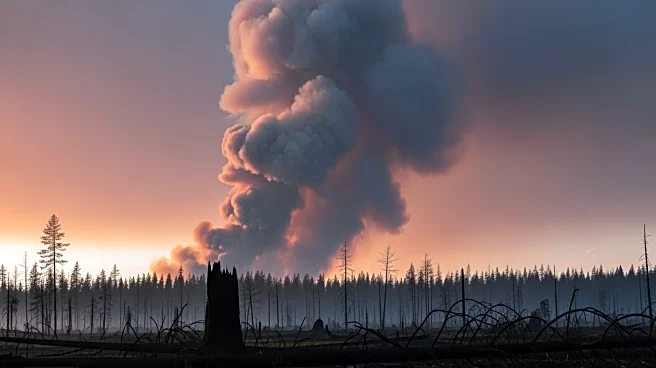
A study published in Science Advances has found that chronic exposure to wildfire smoke is linked to an average of 24,100 deaths annually in the United States from 2006 to 2020. The research highlights the significant health risks posed by fine particulate
matter (PM2.5) from wildfire smoke, which can exacerbate respiratory, cardiovascular, and neurological diseases. The study emphasizes the need for urgent mitigation strategies and better regulation by the Environmental Protection Agency (EPA), as current policies do not adequately address the health impacts of wildfire smoke.
Why It's Important?
The findings underscore the growing public health threat posed by increasing wildfire frequency and intensity, largely driven by climate change. The study calls attention to the need for comprehensive environmental policies and effective monitoring to mitigate the health impacts of wildfire smoke. The Trump administration's rollbacks in climate change policy have been criticized for exacerbating these risks. The study's results could influence future policy decisions and highlight the importance of addressing climate change to protect public health.
What's Next?
The study suggests that more research is needed to fully understand the health impacts of wildfire smoke and to develop effective mitigation strategies. Policymakers may need to consider stricter regulations on PM2.5 emissions and invest in public health initiatives to protect vulnerable populations. The EPA's role in monitoring and regulating air quality could become increasingly important as the frequency of wildfires continues to rise.
Beyond the Headlines
The study highlights the broader implications of climate change on public health and the environment. It raises ethical questions about the responsibility of governments and industries to address climate change and protect public health. The findings could lead to increased public awareness and advocacy for stronger environmental policies.