


What's Happening?
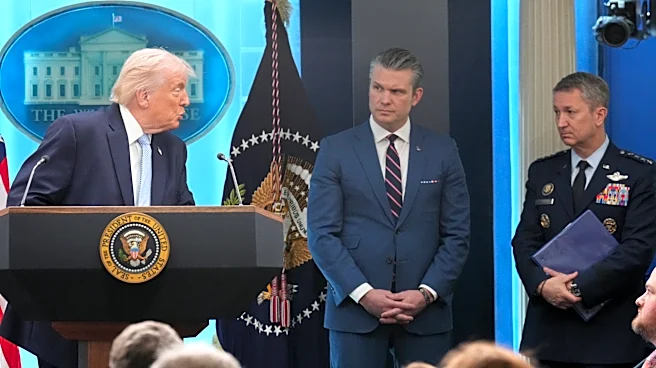
Survivors of a deadly Iranian drone attack on U.S. forces in Kuwait have disputed the Pentagon's account, claiming their unit was unprepared for the assault. The attack, which occurred on March 1, 2026, resulted in the deaths of six service members and
injuries to over 20 others, marking the deadliest attack on U.S. troops since 2021. Members of the Army's 103rd Sustainment Command, who spoke anonymously due to military media restrictions, described the attack's aftermath as chaotic, with significant injuries and a lack of adequate defense measures. They criticized Defense Secretary Pete Hegseth's description of the drone as a 'squirter' that penetrated a fortified position, arguing that their location was not adequately fortified against aerial attacks. The survivors emphasized the bravery and quick response of the soldiers on the ground, despite the lack of preparation and protection.
Why It's Important?
The survivors' accounts raise significant concerns about the preparedness and safety of U.S. military personnel stationed in volatile regions. The discrepancy between the Pentagon's official narrative and the soldiers' experiences highlights potential gaps in military strategy and defense infrastructure, particularly in the context of modern warfare involving drones. This situation underscores the need for a thorough investigation and potential policy changes to ensure the safety of troops. The incident also reflects broader geopolitical tensions in the Middle East, with Iran's use of drone technology posing a growing threat to U.S. interests and allies in the region.
What's Next?
The Pentagon has declined to comment on the soldiers' claims, citing an ongoing investigation into the attack. The outcome of this investigation could lead to changes in military protocols and defense strategies, particularly regarding the use of drones in warfare. Additionally, the incident may prompt further scrutiny of U.S. military deployments and the adequacy of protective measures for troops stationed in high-risk areas. The survivors' call for truth and accountability may also influence public and political discourse on military operations and defense policies.