



What's Happening?
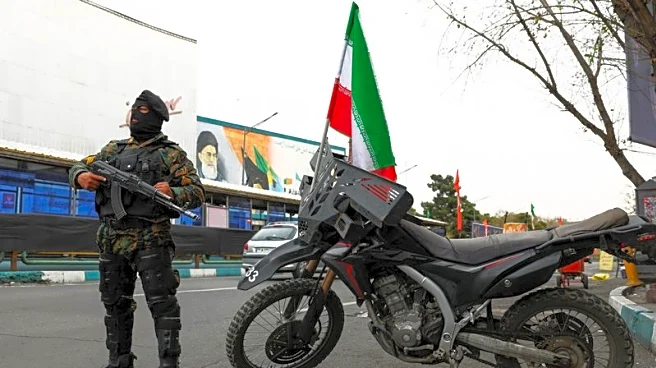
Iran's Islamic Revolutionary Guard Corps (IRGC) has issued a warning to major U.S. tech companies, including Apple, Google, and Microsoft, threatening them with potential strikes. This announcement comes as a response to what the IRGC describes as 'assassinations'
carried out by the United States and its Israeli allies. The IRGC claims these companies are involved in planning and executing operations that have resulted in the deaths of Iranian citizens. The statement from the IRGC declared that for every assassination, a U.S. company would be targeted. Employees of the named companies have been urged to leave their workplaces immediately, and residents within a one-kilometer radius of these facilities have been advised to evacuate. The list of companies includes Cisco, HP, Intel, Oracle, Meta, IBM, Dell, Palantir, Nvidia, JPMorgan, Tesla, General Electric, Spire Solutions, G42, and Boeing.
Why It's Important?
This development highlights the escalating tensions between Iran and the United States, particularly in the realm of cyber and technological warfare. The targeting of major tech companies underscores the strategic importance of these firms in global geopolitics and their perceived role in international conflicts. The potential for retaliatory strikes could have significant implications for the global tech industry, affecting operations, security protocols, and international relations. Companies involved may face increased scrutiny and pressure to enhance their security measures. Additionally, this situation could lead to broader geopolitical consequences, impacting diplomatic relations and potentially leading to further economic sanctions or military actions.
What's Next?
The immediate focus will likely be on the response from the U.S. government and the affected companies. There may be increased diplomatic efforts to de-escalate the situation, as well as potential discussions within international forums to address the accusations and threats. Companies named in the IRGC's statement will need to assess their security measures and prepare for possible disruptions. The situation could also prompt a reevaluation of U.S. foreign policy strategies in the Middle East, particularly concerning Iran. Monitoring the responses from other global powers and international organizations will be crucial in understanding the broader implications of this development.