

What's Happening?
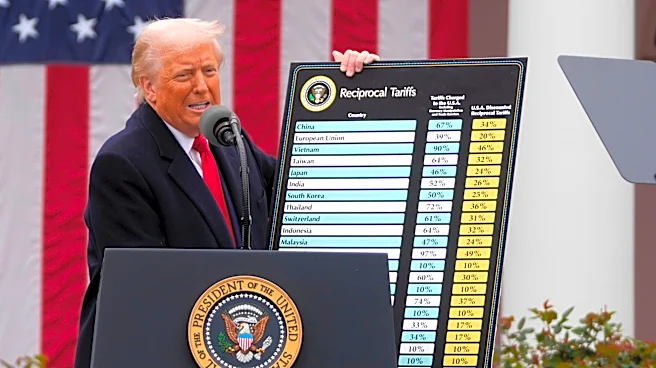
The White House has invoked Section 338 of the Smoot-Hawley Tariff Act of 1930, imposing a 50% tariff on Canadian imports, including wine and hockey sticks. This move bypasses the U.S.-Mexico-Canada Agreement's protections and marks the first use of this
section in 95 years. The administration's decision follows the Supreme Court's rejection of tariffs under the International Emergency Economic Powers Act (IEEPA) in February. The White House has been shifting between various statutes to maintain its tariff regime, despite legal challenges. The administration argues that these tariffs are necessary to address national emergencies, but critics warn of potential economic harm similar to the Great Depression, which was exacerbated by the original Smoot-Hawley tariffs.
Why It's Important?
The reactivation of the Smoot-Hawley Tariff Act's provisions could have significant economic repercussions. Historically, such tariffs have led to increased prices and job losses, as seen during the Great Depression. The administration's actions may strain U.S.-Canada trade relations and impact industries reliant on Canadian imports. The move also raises questions about the balance of power between the executive and legislative branches, as Congress traditionally holds tariff authority. If unchecked, this could set a precedent for future administrations to impose tariffs unilaterally, potentially destabilizing international trade agreements and economic partnerships.
What's Next?
Several states and small businesses are challenging the new tariffs under Section 122 of the Trade Act of 1974, which the administration also invoked. Legal battles are expected to continue as courts assess the validity of these tariffs. The outcome could influence future trade policy and the administration's ability to impose tariffs without congressional approval. Stakeholders, including businesses and trade partners, will likely lobby for legislative or judicial intervention to prevent economic disruption. The situation may prompt Congress to reassert its tariff authority to prevent further executive overreach.
Beyond the Headlines
The administration's reliance on outdated tariff laws highlights broader issues in U.S. trade policy. The use of Smoot-Hawley provisions, considered obsolete, underscores the need for modernized trade legislation that reflects current economic realities. This situation also raises ethical concerns about the impact of protectionist policies on global trade and economic inequality. Long-term, the U.S. may need to reevaluate its approach to international trade to balance domestic interests with global economic stability.