






What's Happening?
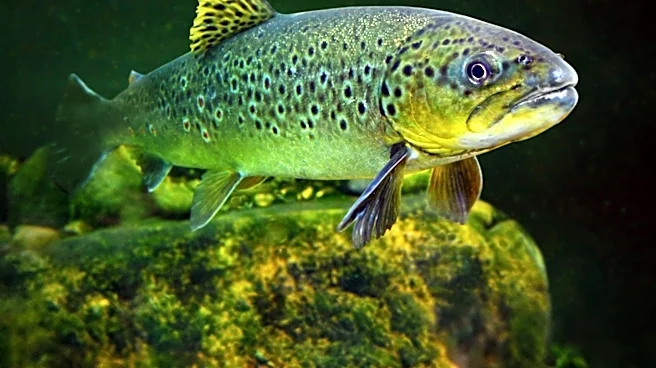
The Iowa Department of Natural Resources (DNR) has initiated an investigation into a significant fish kill in Dry Run Creek, located in Winneshiek County near Ossian. The incident was reported on Thursday by a caller who observed a strong manure odor,
murky water, and numerous dead fish in the creek. Responding crews confirmed the presence of dead fish south of 110th Street, southeast of Ossian. Initial water samples collected from the creek tested positive for ammonia, indicating a potential source of the environmental damage. Further downstream, approximately three miles away in Fayette County, additional dead fish were discovered, suggesting the contamination has spread. The DNR's investigation is ongoing to pinpoint the exact source of the fish kill. In the interim, authorities have advised residents downstream to refrain from using water from Dry Run Creek due to potential contamination.
Why It's Important?
This fish kill incident in Iowa carries significant environmental and public health implications. The presence of ammonia, often associated with agricultural runoff or industrial discharge, can be highly toxic to aquatic life, disrupting ecosystems and potentially leading to long-term ecological damage. For local communities, the advisory against using creek water highlights immediate public health concerns, as contaminated water can pose risks to humans and livestock. Economically, such events can impact local fishing industries, recreational activities, and property values along affected waterways. Furthermore, repeated incidents of water pollution can erode public trust in environmental protection measures and prompt calls for stricter regulations on agricultural practices or industrial waste management. The investigation's outcome will be crucial in determining accountability and implementing preventative measures to safeguard Iowa's natural resources.
What's Next?
The Iowa DNR will continue its investigation to identify the specific source of the ammonia contamination that led to the fish kill. This will likely involve further water testing, site inspections, and potentially interviews with local landowners or businesses. Once the source is identified, enforcement actions, which could include fines or mandates for corrective measures, may be pursued against the responsible party. The DNR will also monitor the creek's water quality and the recovery of its aquatic ecosystem. Public advisories regarding water usage will remain in effect until the creek is deemed safe. Residents are encouraged to report any sightings of dead or stressed fish to the DNR's 24-hour spill line to assist in ongoing monitoring and response efforts. This incident may also prompt discussions about enhancing water quality monitoring and pollution prevention strategies in agricultural areas.
Beyond the Headlines
This fish kill in Winneshiek County underscores the persistent challenge of balancing agricultural productivity with environmental protection in the U.S. Midwest. The detection of ammonia points to potential issues with manure management or fertilizer application, which are common sources of water pollution in agricultural regions. The incident highlights the interconnectedness of land use practices and water quality, revealing vulnerabilities in local ecosystems. Ethically, it raises questions about corporate and individual responsibility for environmental stewardship and the long-term sustainability of current agricultural models. Legally, the investigation could set precedents for how environmental regulations are enforced and how damages to natural resources are assessed. Culturally, such events can galvanize local communities to advocate for stronger environmental policies and greater transparency from industries impacting their natural surroundings, fostering a deeper appreciation for ecological health.