







What's Happening?
The Ministry of Environment, Forest and Climate Change, the Department of Environment, and the United Nations Development Programme (UNDP) in Bangladesh have jointly launched the National Plastic Action Partnership (NPAP) Bangladesh. This initiative is a government-led,
locally driven, and neutral multi-stakeholder platform designed to address plastic pollution. It aims to integrate scientific research, national policy, industrial innovation, green financing, and practical grassroots execution. Operating under the World Economic Forum's Global Plastic Action Partnership network, NPAP Bangladesh has established a national evidence base to formulate a National Plastics Action Roadmap. The partnership focuses on using shared data to resolve policy obstacles, guide investments, and foster sustainable practices across local industries, rather than directly funding projects. Environment Minister Abdul Awal Mintoo emphasized that while plastic pollution has widespread negative impacts, plastics are also integral to production, trade, jobs, businesses, and daily life, necessitating a systemic response towards circularity.
Why It's Important?
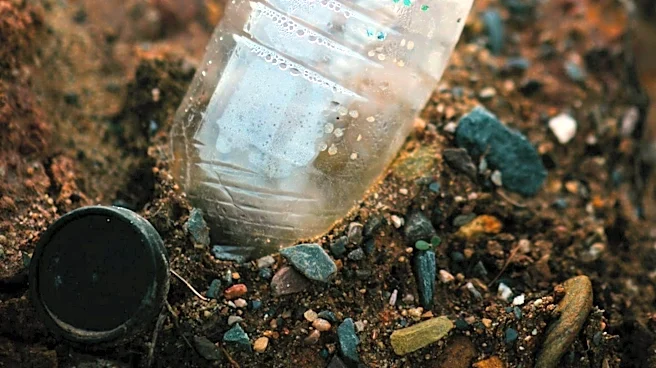
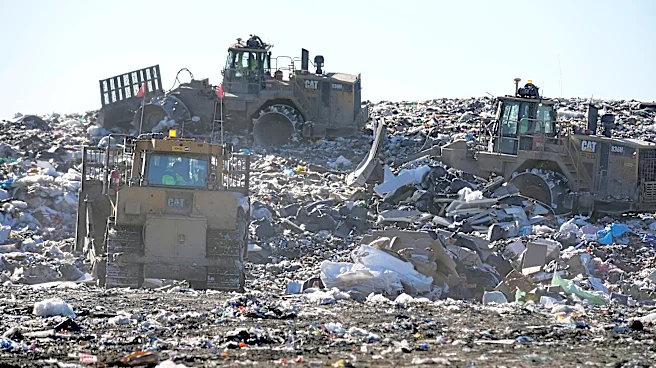
The launch of NPAP Bangladesh is a significant step towards addressing the complex issue of plastic pollution, which has far-reaching environmental and economic implications. By fostering a circular plastics economy, the initiative seeks to mitigate the environmental damage caused by plastic waste, such as methane emissions from landfills and potential water contamination. Economically, transitioning to a circular model presents opportunities for generating green jobs and enhancing industrial competitiveness. The platform's focus on integrating various sectors—from scientific research to industrial innovation and green financing—is crucial for developing comprehensive and effective solutions. This multi-stakeholder approach ensures that the response to plastic pollution is holistic, considering both environmental protection and economic sustainability. The emphasis on rigorous enforcement, systemic infrastructure investments, and shared accountability is vital for moving beyond preliminary discussions to tangible actions that can create a lasting impact.
What's Next?
Accelerating Bangladesh's transition towards a circular plastics economy will require decisive action, moving from regulatory discussions to rigorous enforcement and systemic infrastructure investments. Industrial enterprises are expected to eliminate fragmented waste management practices by establishing transparent collection networks, adopting sustainable packaging designs, and formally integrating marginalized waste pickers into institutional recycling value chains. The success of NPAP Bangladesh will be measured not by the number of meetings held, but by its effectiveness in implementing policy, unlocking investment, and scaling viable solutions. This suggests a future focus on practical outcomes and measurable progress in reducing plastic pollution and promoting circularity within the country's industries.
Beyond the Headlines
The NPAP Bangladesh initiative highlights a broader global shift towards recognizing plastic pollution as a systemic issue requiring integrated solutions. The concept of a 'circular plastics economy' is central to this approach, aiming to keep resources in use for as long as possible, extract the maximum value from them whilst in use, then recover and regenerate products and materials at the end of each service life. This move away from a linear 'take-make-dispose' model has profound ethical and cultural implications, encouraging a re-evaluation of consumption patterns and waste generation. By integrating marginalized waste pickers into formal recycling value chains, the initiative also addresses social equity, transforming informal labor into recognized and valued contributions to environmental sustainability. This holistic approach underscores the interconnectedness of environmental, economic, and social well-being.