

What's Happening?
A new public art installation has been unveiled in Lower Manhattan, paying tribute to 'Little Syria,' New York City's first Arabic-speaking community. The sculpture, titled 'Al Qalam: Poets in the Park,' was created by artist Sara Ouhaddou and is located
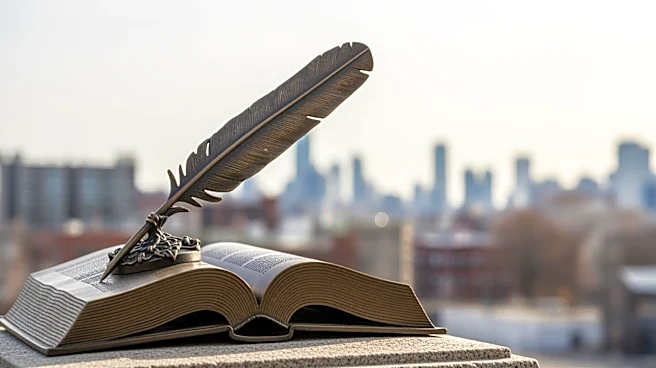
at Elizabeth H. Berger Plaza in the Financial District. This installation honors the vibrant community of poets and writers that thrived in the area from the 1880s until the 1940s, when the neighborhood was largely demolished to make way for the Brooklyn-Battery Tunnel. The artwork features abstract calligraphy inspired by Islamic architecture, with the names of nine notable authors inscribed on its surface. The project aims to celebrate the literary legacy of the neighborhood and highlight the often-overlooked facets of the city's diverse history.
Why It's Important?
The installation serves as a significant cultural and historical reminder of the contributions of the Arabic-speaking community to New York City's rich tapestry. By commemorating the literary achievements of 'Little Syria,' the sculpture not only preserves the memory of a displaced community but also educates the public about the city's multicultural heritage. This initiative reflects a broader effort to recognize and honor the diverse immigrant communities that have shaped New York City. It also underscores the importance of preserving cultural history in urban development, offering a space for reflection and appreciation of the city's past.
What's Next?
The Washington Street Historical Society has developed an augmented reality app that allows visitors to engage with the sculpture by accessing excerpts from the featured writers' works in both Arabic and English. This interactive element is expected to enhance the educational impact of the installation. Additionally, the ongoing maintenance and preservation of the artwork have been ensured through a dedicated fund, indicating a long-term commitment to honoring 'Little Syria's' legacy. The plaza itself, with its design elements evoking Middle Eastern landscapes, will continue to serve as a cultural and historical landmark in the city.
Beyond the Headlines
The unveiling of this sculpture highlights the broader conversation about the preservation of cultural heritage in rapidly changing urban environments. It raises questions about how cities can balance development with the need to honor and remember the communities that have historically contributed to their identity. The project also emphasizes the role of public art in fostering cultural understanding and dialogue, offering a platform for diverse voices and stories to be shared and celebrated.