






What's Happening?
The Strait of Hormuz, a critical chokepoint for global oil supplies, is at the center of a tense standoff between the United States and Iran. Iran has asserted control over the strait, demanding that commercial ships pass through its waters and pay a toll,
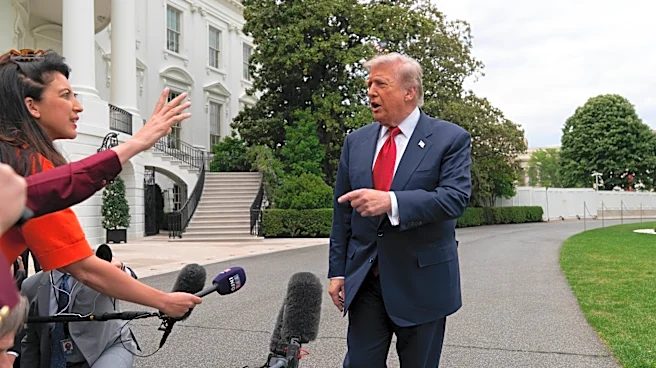
while the U.S. has blocked Iranian ports in response. This has led to a significant disruption in oil transit, affecting approximately 20% of global oil supplies. Both nations are entrenched in their positions, with neither willing to concede, leading to a prolonged stalemate. President Trump has stated that the U.S. economy is resilient, but the global market pressures are expected to eventually impact American shores.
Why It's Important?
The ongoing conflict over the Strait of Hormuz has significant implications for global energy markets and geopolitical stability. The disruption of oil supplies through the strait could lead to increased energy prices worldwide, affecting economies dependent on oil imports. For the U.S., the situation poses a challenge to maintaining freedom of navigation in international waters, a core principle of American foreign policy. The standoff also highlights the broader geopolitical tensions in the Middle East, with potential repercussions for U.S. relations with regional allies and adversaries.
What's Next?
The situation remains fluid, with potential for escalation if either side decides to take military action to secure their interests. The U.S. could seek to build an international coalition to challenge Iran's claims, but this would require significant diplomatic and military resources. Meanwhile, countries in the Gulf are exploring alternative routes to bypass the strait, which could reduce their dependence on this critical waterway in the long term. The outcome of this standoff could set a precedent for future conflicts over international waterways.