







What's Happening?
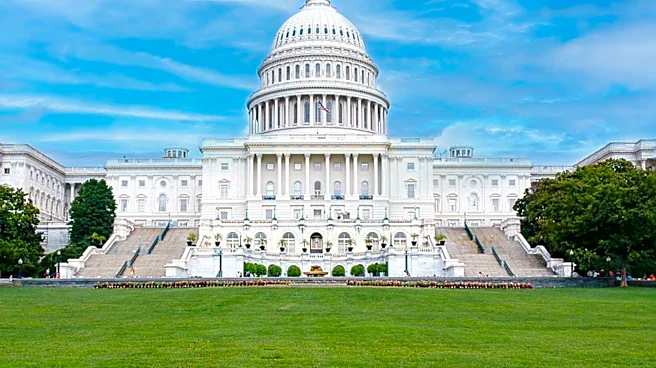
A group of bipartisan lawmakers, including Representatives Jay Obernolte, Lori Trahan, Scott Franklin, Scott Peters, Erin Houchin, and Suhas Subramanyan, have introduced the FRONTIER Act. This legislation is part of the broader Great American AI Act framework
and aims to establish a national, risk-based framework for the development and deployment of advanced artificial intelligence models. The FRONTIER Act proposes tiered requirements for AI developers based on their size, including model cards, risk-management frameworks, independent audits, incident reporting, and ongoing assessments. The act seeks to create a uniform national standard for transparency, auditing, and reporting of catastrophic risks, thereby preventing a patchwork of state regulations.
Why It's Important?
The introduction of the FRONTIER Act is a significant step towards regulating the rapidly evolving field of artificial intelligence. By establishing a national framework, the legislation aims to ensure that AI development is conducted responsibly and transparently, mitigating potential risks associated with advanced AI technologies. This could have far-reaching implications for industries relying on AI, as well as for public safety and privacy. The act's emphasis on transparency and risk management is crucial in building public trust and ensuring that AI advancements do not outpace regulatory measures. The uniform standards proposed by the act could also facilitate innovation by providing clear guidelines for AI developers.
What's Next?
The FRONTIER Act will undergo legislative scrutiny and debate as it moves through Congress. Lawmakers will need to address various concerns, including the balance between regulation and innovation, and the potential impact on small and large AI developers. Stakeholders from the tech industry, civil society, and government agencies are likely to engage in discussions to refine the bill's provisions. The outcome of these deliberations will shape the future regulatory landscape for AI in the United States, influencing how AI technologies are developed and deployed across different sectors.